Home Blog

The $50,000 Mistake: Why “Shiny Object Syndrome” is Killing Your Success (And How to Stop It)

0

Title: The $50,000 Mistake: Why “Shiny Object Syndrome” is Killing Your Success (And How to Stop It)

Reading Time: 9 minutes


Introduction: The Epidemic of the Unfinished

We’ve all been there.

It’s 10:00 AM. You are deep in the zone, working on Project A—the one you swore was your top priority for the quarter. Suddenly, a notification pops up. A competitor just launched a new tool. Your friend’s newsletter about a new AI trend hits your inbox. Or worse, you see an ad for a “life-changing” new course promising to 10x your revenue in 30 days.

Within five minutes, you’ve opened 12 tabs, signed up for three free trials, joined a new Discord community, and completely abandoned Project A.

Congratulations. You’ve just caught a severe case of Shiny Object Syndrome (SOS).

As entrepreneurs, creators, and high-performers, we are wired to look for the edge. We crave novelty. We mistake motion for progress. But in the modern digital world, that craving has become an addiction. And that addiction is expensive—not just in dollars, but in years of wasted potential.

Let me be blunt: Shiny Object Syndrome isn’t just a productivity problem. It’s a strategy problem. And if left unchecked, it will quietly bankrupt your future.


Part 1: The Hidden Cost of “New” (A Funeral for Momentum)

Most people think Shiny Object Syndrome is just a minor distraction. You lose an afternoon here, a week there. No big deal, right?

Wrong.

Let’s walk through the typical 12-month journey of an SOS sufferer:

MonthFocusOutcome
JanStart a podcastBought microphone, recorded 3 episodes
MarSwitch to YouTubeBought camera, uploaded 2 videos
MayLaunch a newsletterWrote 4 emails, got bored
JulyBuild a dropshipping storeSpent $500 on ads, made $50
SeptStart a coaching businessBuilt website, no clients
NovLearn AI automationBought $1,000 course, never finished
DecBack to podcast ideaEquipment is now obsolete

At the end of the year, what do you have? Seven unfinished projects. Zero momentum. And a credit card bill full of tools, software, and courses you never fully used.

You aren’t building momentum. You are digging seven shallow graves.

Success doesn’t come from the platform, the tool, or the secret hack. Success comes from time in the market—the relentless, unsexy application of effort in one direction long enough to achieve escape velocity.

Every time you chase a new object, you reset your progress to zero. You are the dog chasing the car—even if you catch it, you don’t know how to drive it. And by the time you learn, the car has moved on.

The $50,000 Calculation

Let’s put a number on it. If you earn $50/hour (roughly $100k/year) and you spend just 2 hours per day chasing shiny objects—researching, comparing, setting up, abandoning—that’s 10 hours per week. That’s 520 hours per year.

520 hours × $50 = $26,000 in lost productive time.

Add in the cost of unused software subscriptions ($2,000/year), abandoned courses ($3,000/year), and equipment purchases ($5,000/year), plus the opportunity cost of what you could have built if you’d just stayed focused…

You’re easily looking at $50,000+ per year burned on distraction.

And that’s just the financial cost. The psychological cost—the shame, the guilt, the feeling of “Why can’t I just finish anything?”—is incalculable.


Part 2: Why Your Brain Loves the Chase (The Dopamine Loop Exposed)

SOS isn’t a character flaw. It isn’t laziness. It isn’t a lack of discipline. It is biology hijacked by technology.

Here’s what’s happening inside your skull:

The Dopamine Trap

When you discover a new strategy, research a new tool, or buy a new gadget, your brain releases dopamine—the anticipation chemical. Dopamine isn’t about pleasure; it’s about wanting. It’s the fuel of possibility.

You feel successful before you actually do the work. The planning phase feels amazing. The research phase feels productive. The purchasing phase feels like a commitment to greatness.

But here is the cruel trick: The dopamine hits hardest during the planning and buying phase. The actual boring work of implementing the tool? Learning the software? Writing the content? Doing the outreach? That releases almost no dopamine at all.

So your brain says: “This is boring. This feels like work. Let’s find another new thing.”

You become a serial starter, but never a finisher.

The FOMO Feedback Loop

Add social media to the mix, and you have a perfect storm. Every time you scroll, you see:

  • “How I grew to 1M followers in 6 months using THIS new strategy”
  • “The AI tool that replaced my entire team”
  • “Why [platform] is dead and [new platform] is the future”

Your brain interprets these posts as threats. Everyone else is moving forward. If you don’t jump now, you’ll be left behind.

You aren’t making a strategic decision. You’re making a fear-based reaction. And fear is a terrible investment advisor.

The Identity Trap

Here’s the deepest layer: SOS often serves a psychological need. Starting new things feels hopeful. It feels like you’re a person with potential. Finishing things, on the other hand, requires you to face your limitations, your mistakes, and the gap between your vision and your current skills.

Abandoning a project allows you to keep the fantasy alive. You never have to find out that your “brilliant idea” might actually be average. You never have to experience the discomfort of putting something imperfect into the world.

Shiny Object Syndrome is, at its core, a form of procrastination dressed as ambition.


Part 3: The 7 Faces of Shiny Object Syndrome (Which One Are You?)

Not all SOS looks the same. Understanding your specific flavor is the first step to curing it.

1. The Tool Hopper

“If I just had the perfect CRM/project management tool/email software, everything would click.”

You’ve tried Asana, Trello, Monday, ClickUp, Notion, and now you’re eyeing Basecamp. You’ve switched your email provider four times in two years. You spend more time optimizing your workflow than doing actual work.

The truth: The perfect tool doesn’t exist. Your problem isn’t the system; it’s the discipline to use any system consistently.

2. The Platform Jumper

“TikTok is dead. LinkedIn is the new goldmine. Wait, no—Threads is taking off. Actually, I hear YouTube Shorts is where it’s at.”

You’ve built audiences on three different platforms, abandoned each one when the algorithm changed or a new shiny platform appeared. You have no home base. Your audience can’t find you because you keep moving.

The truth: The platform doesn’t matter. Building a direct relationship with your audience (email, community) is the only asset that can’t be taken away.

3. The Course Collector

“I just need to learn one more skill before I start.”

Your hard drive contains 47 unfinished courses, 12 unread business books, and a bookmark folder with 200 “must-read” articles. You are educated beyond your level of action.

The truth: You already know enough to start. You don’t have a knowledge problem; you have an execution problem.

4. The Niche Pivoter

“SaaS is too competitive. I’m going to do coaching. Actually, coaching is saturated. What about info products? No, I think I’ll start an agency.”

You change your business model every 3-4 months. You’ve never stayed in one niche long enough to build expertise or reputation.

The truth: Every niche feels hard in months 1-6. The money is in months 12-36. You keep quitting right before the breakthrough.

5. The Strategy Chaser

“SEO is dead. I’m going all-in on paid ads. Wait, paid ads are too expensive. I’ll do influencer marketing. Actually, cold email is the secret.”

You read one case study and immediately abandon your current strategy. You have no consistent marketing approach because you keep pivoting to the “latest” tactic.

The truth: Almost every marketing strategy works if you do it for 12 months. No strategy works if you do it for 6 weeks.

6. The Tech Addict

“ChatGPT changed everything. No wait, Claude is better. Have you seen Midjourney v6? Oh, and this new AI video generator just dropped.”

You spend hours each week testing new AI tools, automation workflows, and tech stacks. You’re an expert at “what’s new” and a beginner at “what works.”

The truth: Technology is a lever, not a solution. Without a fundamental business model and consistent execution, the best AI in the world won’t save you.

7. The Fresh Start Fantasist

“My current project is too messy. I should just start over from scratch.”

Whenever things get difficult, you fantasize about burning it all down and beginning again. A clean slate. A new domain. A new brand. A new beginning.

The truth: Starting over feels good because there are no mistakes yet. But you’ll just recreate the same mess 6 months from now. Learn to clean as you go.


Part 4: Real Stories of SOS (Case Studies)

Case Study #1: The Agency Owner Who Lost $200,000

Name: Mark (fictionalized, but based on a true story)
Business: Digital marketing agency
The SOS Pattern: Every 6 months, Mark would decide his agency’s service model was “outdated.” He pivoted from SEO → Facebook Ads → Email Marketing → Web Design → Back to SEO.

The Result: Clients were confused. His team was frustrated. His reputation suffered. He spent $200,000 on new software, training, and rebranding over 3 years. His revenue actually decreased because he kept losing momentum.

The Turning Point: Mark committed to ONE service (SEO) for 24 months. He ignored every “next big thing.” Year 1 was hard. Year 2, his expertise deepened, referrals exploded, and he crossed $1M in revenue.

Lesson: Depth beats breadth. Specialization compounds.

Case Study #2: The YouTuber Who Quit at 99 Videos

Name: Sarah (fictionalized)
Business: YouTube fitness channel
The SOS Pattern: Sarah uploaded 99 videos over 18 months. Her channel was growing slowly. She got bored. She saw a TikTok influencer making “easy money.” She abandoned YouTube for TikTok. Then she saw a podcasting opportunity. Then she tried Instagram Reels.

The Result: After 3 years, she had 5,000 followers on YouTube, 8,000 on TikTok, 3,000 on Instagram, and a podcast with 12 episodes. No platform had enough momentum to take off.

The Turning Point: Sarah went back to YouTube. She committed to 100 more videos in ONE niche. Video #142 went viral (2M views). Her channel exploded. The “overnight success” took 3 years and 241 videos.

Lesson: The breakthrough is always one more repetition away. You don’t know how close you are.

Case Study #3: The Course Collector Who Finally Launched

Name: James (fictionalized)
Business: Wanted to start a business coaching program
The SOS Pattern: James spent 14 months “preparing.” He bought 23 courses on marketing, sales, web design, copywriting, and mindset. He read 47 books. He joined 12 masterminds. He never launched.

The Result: $15,000 spent on education. Zero revenue earned. James was addicted to the identity of “entrepreneur” but terrified of being an actual entrepreneur.

The Turning Point: James deleted all his unused courses. He offered a free coaching session to 10 people. He learned more in those 10 conversations than in 14 months of consuming.

Lesson: Action is the only real education. Everything else is just entertainment.


Part 5: The 3-Step SOS Rescue Protocol (Expanded)

If you feel the itch to jump ship on your current project for a flashier one, do not trust your feelings. Trust this protocol.

Step 1: The “Red Door” Question

Before you buy the course, switch the software, or pivot your niche, ask yourself:

“If I never discovered this new thing, would my current project still eventually succeed?”

If the answer is yes, close the tab. Right now. Your current path works; you just lack the patience to walk it.

If the answer is no—if your current project is genuinely doomed regardless of this new thing—then you have a different problem. You need to kill that project and start fresh. But be honest: 95% of the time, the answer is yes, your current project would work if you just stuck with it.

Write this on a sticky note and put it on your monitor: “The path I’m on works. I just have to stay on it.”

Step 2: The “One Year” Filter

Shiny objects promise results in 30 days. Put that object through a different test.

Ask: “Will this matter 12 months from now? Will I be glad I invested time in this, or will it be obsolete?”

Apply this filter to every opportunity:

  • SEO → Matters in 12 months ✅
  • Building an email list → Matters in 12 months ✅
  • Your logo → Doesn’t matter in 12 months ❌
  • The font on your landing page → Doesn’t matter in 12 months ❌
  • That viral TikTok dance trend → Definitely doesn’t matter ❌
  • Your core product quality → Matters ✅

Most opportunities will fail the test. Ignore them.

Step 3: The Boredom Contract

This is the hardest step. You must sign a contract with yourself that says:

“I will do the boring thing for 90 days. No pivoting. No new tools. No new strategies. Just execution.”

Why 90 days? Because 30 days is too short to see results. 60 days is still the “messy middle.” But 90 days is long enough to:

  • Learn the basics of any skill
  • See the first signs of compound growth
  • Break the addiction to novelty
  • Prove to yourself that you can finish

The Boredom Contract Template:

I, [your name], commit to focusing exclusively on [one project] for 90 days starting [date]. During this period, I will not:

  • Purchase any new courses or tools
  • Switch platforms or strategies
  • Start any new projects
  • Research “better” ways to do what I’m doing

Instead, I will do the work. Every day. Even when it’s boring. Especially when it’s boring.

Signed: ___
Date: ___

Put this on your wall. Show it to an accountability partner. Treat it like a legal document.


Part 6: The 30-Day SOS Detox Plan

Ready to break the cycle? Here’s a day-by-day plan to reset your relationship with novelty.

Week 1: Awareness & Auditing

Day 1: Write down every project, tool, course, and platform you’ve started in the last 12 months. Count them. Feel the weight of your fragmentation.

Day 2: Calculate how much money you’ve spent on unused tools, courses, and software in the last year. Look at the number. Sit with it.

Day 3: Track every distraction for one full workday. Every time you open a new tab, check social media, or research a “better way,” write it down. You’ll be shocked.

Day 4: Unsubscribe from 10 newsletters that promote “new strategies” or “secret hacks.” These are your triggers.

Day 5: Delete any unused apps from your phone. Remove social media apps from your home screen (or better, delete them entirely).

Day 6: Identify your ONE core project. The one that matters most. The one that, if completed, would change everything. Write it on a whiteboard.

Day 7: Rest. You’ve done the hard work of seeing the problem clearly.

Week 2: Elimination

Day 8: Cancel all unused software subscriptions. If you haven’t used it in 30 days, cancel it.

Day 9: Archive or delete all unfinished projects that aren’t your ONE core project. Give yourself permission to let them go.

Day 10: Close all browser tabs. Use a tool like OneTab or just manually close everything. Start fresh.

Day 11: Turn off ALL notifications. Every single one. Phone, desktop, everything.

Day 12: Set a “distraction schedule.” Check email twice per day (11 AM and 3 PM). Check social media once per day (after work). No exceptions.

Day 13: Tell an accountability partner about your ONE core project and your 90-day commitment.

Day 14: Rest. Notice how much lighter you feel.

Week 3: Deep Work Installation

Day 15: Implement a 90-minute deep work block every morning. Phone in another room. No tabs except your work.

Day 16: Use a timer. Work in 25-minute Pomodoros. When the timer is on, you do NOTHING else.

Day 17: Create a “Shiny Object Parking Lot”—a Google Doc where you write down every new idea that pops into your head. You’re not ignoring ideas; you’re saving them for later.

Day 18: When you feel the urge to research or pivot, do 10 pushups instead. Physically interrupt the dopamine loop.

Day 19: Review your progress on your ONE core project. Notice that you’re actually moving forward.

Day 20: Journal about how it feels to stay focused. You’ll likely feel uncomfortable. That’s normal.

Day 21: Rest. Celebrate one week of focus.

Week 4: Momentum Building

Day 22: Publish something. Ship something. Put your work into the world. Imperfect action beats perfect inaction.

Day 23: Get feedback. Use it to improve your ONE core project, not to pivot.

Day 24: Block out your entire next month. Schedule deep work blocks for your ONE core project. Protect them like medical appointments.

Day 25: Unfollow anyone on social media who makes you feel like you’re “behind” or “missing out.” Your feed should inspire focus, not fear.

Day 26: Create a “Done List.” Every day, write down what you finished. This rewires your brain to value completion, not just starting.

Day 27: Help someone else with their SOS. Teaching the cure reinforces it for yourself.

Day 28: Review your 90-day commitment. You’re one-third of the way there.

Day 29: Plan your next 30 days. Same project. Deeper work.

Day 30: Celebrate. You’ve completed the detox. Now do it again.


Part 7: The Cure—Novelty in the Niche

Does this mean you should never try new things? Of course not. Stagnation is also dangerous. Innovation is necessary.

But there’s a difference between shallow novelty (jumping to a completely new field) and deep novelty (finding fresh angles within your existing focus).

Instead of chasing a new direction, chase a new depth.

Examples of Deep Novelty

Instead of…Try this within your niche…
Abandoning your newsletter for TikTokStart a unique segment inside your newsletter (e.g., “Crazy Experiment of the Week”)
Pivoting from gardening to AIInterview an eccentric gardener using 100-year-old techniques
Switching from SEO to paid adsTest one wild SEO strategy you’ve never tried before
Dumping your SaaS product for coachingAdd a tiny coaching element to your SaaS onboarding
Starting a new podcast from scratchDo a “remix” season where you re-release your best episodes with new commentary

The principle: You don’t need a new mountain. You need to find new paths up the same mountain.

The 10% Rule

Allow yourself 10% of your time for strategic exploration—reading, researching, testing new ideas. But 90% of your time must be pure execution on your ONE core project.

Set a timer. When the 10% is up, close the research tabs and get back to work.


Part 8: What to Do When You Genuinely Need to Pivot

Sometimes, the shiny object is the right move. Sometimes you genuinely chose the wrong path. How do you know the difference?

The Pivot Protocol (Only Use When ALL Are True)

You have permission to pivot only if you can answer YES to all five questions:

  1. Have I worked on my current project for at least 90 days? (No 2-week pivots allowed)
  2. Have I given 100% effort? (Not 70%. Not “I tried for a bit.” Real, sustained effort.)
  3. Have I gotten external feedback? (Your own feelings don’t count. What do customers/market say?)
  4. Is there clear evidence this won’t work? (Data, not feelings. Low open rates? No sales? High churn?)
  5. Does the new opportunity have a higher ceiling AND fit my skills? (Not just “cooler” or “easier.”)

If you answer NO to any of these, you don’t need to pivot. You need to execute.


Part 9: Long-Term Strategies for SOS Immunity

You don’t just want to survive the current SOS episode. You want to build immunity for life.

Strategy 1: Build a “Finish Line” Muscle

Start small. Pick a tiny project—organizing one drawer, writing one page, making one sales call—and finish it today. Feel how good completion feels. Then do it again tomorrow. The muscle of finishing grows with repetition.

Strategy 2: Create a “Graveyard of Abandoned Ideas”

Keep a document where you bury every project you’ve abandoned. Write down what you learned and why you stopped. This isn’t shame; it’s wisdom. When a new shiny object appears, visit the graveyard and ask: “Is this going to join you?”

Strategy 3: Find a “Stay-the-Course” Sponsor

Most accountability partners just ask, “Did you do the thing?” You need someone who asks, “Are you still focused on the same thing, or are you getting distracted again?” Find someone ruthless about focus.

Strategy 4: Measure What Matters

You chase shiny objects because you don’t have clear metrics for success. Define 3 key metrics for your ONE core project. Track them weekly. When you see progress in the numbers, the need for novelty decreases.

Strategy 5: Schedule Strategic Boredom

Ironically, the best cure for chasing novelty is embracing boredom. Schedule 30 minutes per day of absolutely nothing. No phone. No book. No podcast. Just sit. Boredom is where real ideas come from—and where the urge to “do something new” loses its power.


Part 10: The Bottom Line (A Letter to Your Future Self)

Imagine it’s one year from today.

You ignored the noise. You deleted the distractions. You unsubscribed from the FOMO factory. You picked ONE thing—the right thing—and you stuck with it.

You did the boring work on the days you felt motivated. And you did it on the days you felt like quitting.

You shipped. You iterated. You improved. You got feedback. You ignored the “next big thing” because you were too busy mastering your current thing.

What does your life look like?

Now imagine the alternative. You chased every shiny object. You started 12 projects and finished zero. You have a hard drive full of half-baked ideas, a credit card full of charges, and a heart full of regret.

Which future do you want?

Here’s the truth they don’t tell you in the guru courses: Your greatest competitive advantage isn’t intelligence, talent, or luck. It is your ability to sit still, ignore the noise, and finish what you started.

The view from the finish line is much better than the view from the starting line. But you’ll never see it if you keep running to the next starting line.

So close the 47 tabs. Put the credit card away. Uninstall the app. Say no to the “amazing opportunity.”

Go back to Project A.

It’s waiting for you. And it’s closer to success than you think.


Postscript: A Quick SOS Self-Assessment

Rate yourself 1-5 (1 = Never, 5 = All the time):

  1. I start new projects more often than I finish them.
  2. I’ve bought software or courses in the last 6 months that I haven’t used.
  3. I’ve changed my business strategy or niche in the last year.
  4. I feel anxious or “behind” when I see what others are doing.
  5. I spend more time researching tools than using them.
  6. I have a “someday” list of ideas that distracts me from today’s work.
  7. I’ve abandoned a project that was close to working.

Scoring:

  • 0-10: Mild SOS. You’re doing okay, but stay vigilant.
  • 11-20: Moderate SOS. You’re losing momentum. Time for the 30-day detox.
  • 21-35: Severe SOS. Your success is being actively sabotaged. Stop reading. Start the detox today.

Found this helpful? If you’re tired of chasing trends and want to actually finish what you start, join my newsletter for weekly tactics on discipline, focus, and the art of finishing.

One last thing: Before you close this tab, take ONE action. Right now. Send that email. Write that paragraph. Make that call. The best cure for Shiny Object Syndrome is a single step forward on the thing you’re already doing.

Go.
Stop Overpaying for Supplements – Get the Purest Ingredients at Member Prices (60-Day Guarantee)

0

Headline: Stop Overpaying for Supplements – Get the Purest Ingredients at Member Prices (60-Day Guarantee)

By Rames Rughoo – LiveGood Affiliate rrughoo

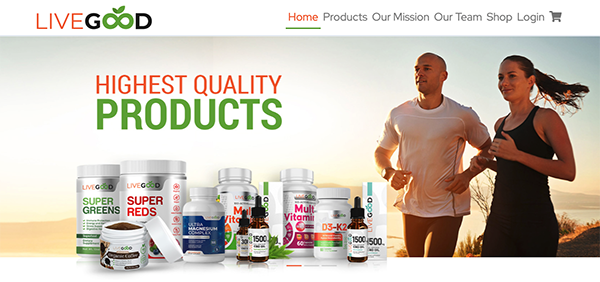
Let me ask you a honest question: Why are you still paying $50, $70, or even $100 for supplements that are filled with fillers and expensive marketing markups?

You don’t have to. LiveGood has changed the game. And through my personal shopping link – rrughoo – you can access the most advanced nutritional supplements on the market for a fraction of the price.

What Makes LiveGood Different?

Most supplement companies spend fortunes on advertising, fancy bottles, and middlemen. Who pays for that? You do.

LiveGood does the opposite. They are committed to helping people, not squeezing every dollar out of them. That means you get:

The purest, highest quality ingredients on the planet – no cheap fillers, no junk
Results-driven formulations – backed by science, not hype
Dramatically lower prices – because they skip the expensive mark-ups

As their website says: “LiveGood brings you the most advanced nutritional supplements on the market, made with only the purest, highest quality, results-driven ingredients on the planet, without the expensive pricing mark-ups of other companies.”

Shop Through My Link rrughoo – And Get My Personal Support

When you shop at https://www.ShopLiveGood.com/rrughoo , I become your dedicated affiliate. That means:

🔹 I am here to help – Have a question about which product is right for you? Just ask.
🔹 Seamless experience – If anything ever confuses you, I will walk you through it.
🔹 Your advocate – I will make sure you get the most value from every purchase.

The LiveGood website puts it simply: “Affiliates provide a seamless experience with your LiveGood products. If you ever have any questions or concerns, your Affiliate is there to help.”

60-Day Money-Back Guarantee – Zero Risk

The biggest fear when trying new supplements is wasting money on something that doesn’t work for you. LiveGood has completely eliminated that risk.

Every single purchase comes with a 60-Day Money-Back Guarantee. Not satisfied? You get a full refund. No fine print. No runaround. You have two full months to try the products and see real results.

That means you can order with complete confidence.

What Products Can You Buy?

LiveGood offers a full line of cutting-edge supplements, including:

  • Multivitamins – comprehensive daily nutrition
  • Magnesium – for sleep, stress, and muscle function
  • Curcumin – powerful anti-inflammatory support
  • Super Greens – all-in-one wellness blend (member price just $19.95 vs $99 elsewhere)
  • And much more – collagen, probiotics, vitamin D3+K2, and more

All at wholesale member prices that beat any competitor.

How to Get Started (Takes 2 Minutes)

  1. Click my link: ShopLiveGood.com/rrughoo
  2. Choose your products – browse the full catalog
  3. Select a membership option – you can shop as a customer or join as a member for even lower prices
  4. Enjoy your savings – and your 60-day guarantee

It is that simple.

Don’t Keep Overpaying

The world has changed. You no longer have to choose between quality and affordability. LiveGood gives you both – plus a full 60-day guarantee and a dedicated affiliate (me) to help you.

Ready to switch to better supplements at lower prices?

👉 Click Here to Shop LiveGood Through Affiliate rrughoo 👈

Your health – and your wallet – will thank you.

To your wellness!

Disclaimer: This post contains my personal affiliate link (rrughoo). I am here to support you, and LiveGood’s 60-day guarantee means you have nothing to lose. Results may vary.

Best fashion news of December 2025

0

Published: December 31, 2025 | 5 min read | By Industry Editors

As 2025 draws to a close, the fashion industry is proving that it is no longer just about hemlines and color palettes. This December, the headlines were dominated by a “great correction”—a seismic shift where artificial intelligence, legal accountability, and structural power dynamics reshaped the business from the ground up .

From Zara’s controversial AI rollout to a landmark fur ban in New York, here are the 20 most impactful fashion news stories of December 2025, complete with insights and links to help you navigate the evolving industry.


The Big Story: AI & The Future of Image

The biggest conversation this month revolved around technology and the human form. Zara confirmed it is now using generative AI to create campaign imagery. While the brand maintains it uses real models and digitally re-dresses them to improve efficiency, the move has ignited a firestorm regarding labor rights, authorship, and the intellectual property of a model’s likeness . As fast fashion fully embraces automation, Zalando and H&M are following suit, signaling that 2026 will be the year AI becomes standard infrastructure, not a novelty .

Keywords & Links:

Sustainability & Ethics: The Fur Ban & Legal Risks

In a landmark move for animal welfare, the Council of Fashion Designers of America (CFDA) announced that beginning with September 2026, New York Fashion Week will no longer promote animal fur. Aligning with London, Copenhagen, and Melbourne, the ban covers mink, fox, and rabbit, though it includes an exemption for Indigenous communities . Meanwhile, the “great correction” hit greenwashing hard; Shein faced hefty fines in Italy for misleading environmental claims, proving that sustainability is now a legal liability, not just a marketing badge .

Keywords & Links:

Luxury & Lifestyle: Ambassadors and Alpine Fashion

The luxury sector closed the year with strategic power plays. Louis Vuitton named rising star Chase Infiniti as its newest ambassador—a move celebrated by “Black Hollywood” and a clear signal of where the brand sees the future of red-carpet star power . In a shift from beach to mountain, Saint Laurent launched its inaugural Ski Collection, the “Snow Edition,” complete with a collaboration with Swiss manufacturer ZAI for exclusive skis, expanding the house into alpine performance wear .

Keywords & Links:

Brand Collaborations & Revivals

Gap continues its stunning retail revival by partnering with Gen-Z beauty favorite Summer Fridays. The 20-piece capsule, featuring “Jet Lag Mask blue” pyjamas and cozy knits, merges fashion and beauty to drive holiday sales . In sports, TUI partnered with Danish brand Hummel to launch a travel-centric apparel line, tapping into the booming “sport-cation” trend driven by Gen Z . Over in streetwear, Denim Tears launched its first proprietary in-house denim (“Denim by Denim Tears”), moving beyond Levi’s collaborations .

Keywords & Links:

Pop Culture & Bridal

December is wedding season, even for celebrities. Venus Williams tied the knot, and Kim Cattrall married Russell Thomas in an intimate London ceremony . In a heartwarming viral moment, actor Miles Teller gifted his wife Keleigh a recreation of her wedding dress that was lost in the LA wildfires . On the color front, Pantone’s selection of the elegant neutral Cloud Dancer for 2026 is influencing winter bridal wear and gown designers .

Keywords & Links:

Trends: Houndstooth & Flame Red

As we look toward 2026 runways, two distinct trends emerged. Houndstooth is making a major comeback, reimagined through exaggerated proportions and glittering tweed for a modern, “gilded” winter look . For those seeking energy, the color Flame Red is the shade of the season, often paired with Indigo Blue and Optical White to create striking, powerful silhouettes for holiday parties .

Keywords & Links:

LA Fashion Week: Art Hearts Fashion recap

Houndstooth Trend: Modernizing classic chic

Flame Red Color: Festive winter styling

Ronaldo Makes History as Brazil Join the Party: A 2026 World Cup Prelude

0

Ronaldo Makes History as Brazil Join the Party: A 2026 World Cup Prelude

By James Rughoo | Updated: May 13, 2026 | 12 min read

As the football world counts down to the FIFA World Cup 2026 — set to kick off on June 11 across Canada, Mexico, and the United States — two monumental storylines have captured global attention. Cristiano Ronaldo continues to shatter records at an age when most players have long retired, while Brazil, under the guidance of Carlo Ancelotti, has finally found its footing after a turbulent qualifying campaign .

This is the story of legends defying time, young heirs embracing their destiny, and a sleeping giant awakening just in time for the biggest stage.


Part 1: Ronaldo Makes History — The Eternal Captain

143 Goals and Counting

When Portugal lined up against Armenia in Yerevan on September 6, 2025, the world expected a routine win. What transpired was a masterclass from the Portugal national team, with their captain once again proving why he is the all-time leading goalscorer in football history.

Cristiano Ronaldo scored twice in the 5-0 demolition, taking his international tally to 140 goals at the time and pushing his career total to an astonishing 143 goals in 226 appearances for his country . By April 2026, UEFA confirmed that Ronaldo remains the top scorer in international football, with his closest rival — Lionel Messi — trailing at 116 .

The statistics are staggering:

  • 143 international goals — more than any player in history
  • 55 goals in EURO qualifying and tournaments — an all-time record
  • 14 goals in EURO final tournaments — another record
  • 41 goals in World Cup qualifying — the most by any European
  • Scored in five World Cups — a feat only matched by a handful of legends

But perhaps the most remarkable detail of the Armenia match was not the goals themselves, but the man scoring them. At 40 years old, Ronaldo demonstrated the fitness and finishing ability of a player a decade younger. Playing his 226th match for Portugal, he remains the heartbeat of Roberto Martínez’s squad.

The Missed Penalty and the Last-Minute Hero

The qualifiers were not without drama. On October 11, 2025, Portugal hosted the Republic of Ireland at Estádio José Alvalade in Lisbon. A stubborn Irish defense parked the bus, frustrating the home side for 90 minutes. Ronaldo had a golden opportunity from the penalty spot in the 75th minute but saw his effort saved by Caoimhín Kelleher .

For a moment, it seemed the night would end in frustration. But Portugal’s persistence — and their captain’s leadership — paid off. In added time, Rúben Neves rose to head home Francisco Trincão’s cross, sealing a 1-0 victory that sent the Seleção one step closer to the 2026 World Cup .

Ronaldo’s reaction after the final whistle — chest puffed, arms raised, roaring to the crowd — reminded the world why he remains the ultimate competitor. He had not scored, but his presence on the pitch occupied defenders, created space, and inspired his teammates.


Part 2: Brazil Join the Party — A Nation Breathes Again

The Ancelotti Effect

For a nation that invented jogo bonito, the 2026 World Cup qualifying campaign was a rollercoaster. After a disappointing early exit in 2022 and a string of inconsistent performances, the Brazilian national team needed a reset. Enter Carlo Ancelotti, the Italian coaching legend who took the reins with a mandate to restore order and flair .

” It is a joy to have time to prepare for this important event for Brazil ,” Ancelotti told CBF TV as the 100-day countdown to the World Cup began in March 2026. ” It is a great motivation and a great responsibility to try to do our best. I am sure we will have a very high-level World Cup ” .

Ancelotti’s calm, tactical approach has steadied a squad that looked vulnerable in the early stages of CONMEBOL World Cup qualifying. But the true turning point came on May 5, 2026, in Brasília.

Vinicius Jr Saves Brazil

With qualifying pressure mounting, Brazil faced Colombia — a team known for physicality and flair. A loss would have seen Brazil slump to sixth in the South American standings, putting their automatic qualification in jeopardy .

Raphinha opened the scoring from the penalty spot in the 6th minute after Vinicius Junior was fouled in the box. The 70,000 fans in the Mane Garrincha stadium erupted. But Colombia, ever dangerous, equalized before half-time when Luis Diaz — assisted by the legendary James Rodriguez — fired home in the 41st minute .

The second half was a tense affair. Brazil controlled possession but lacked a cutting edge. As the clock ticked toward stoppage time, it seemed the home side would have to settle for a draw. Then, in the 94th minute, Vinicius Junior took matters into his own hands.

From long range, the Real Madrid superstar unleashed a shot that deflected off Jefferson Lerma and beat goalkeeper Camilo Vargas. The stadium exploded. Brazil had won 2-1 .

” This was very important, we deserved to win. I deserved this goal too for all I have worked for ,” Vinicius said after the match, visibly emotional. It was his first goal in the entire qualifying tournament — a drought that had weighed heavily on the 25-year-old .

The victory moved Brazil to second place in the CONMEBOL standings with 21 points, trailing only Argentina. More importantly, it released the pressure valve on Ancelotti and his squad ahead of the World Cup .

The Group of Destiny

The FIFA World Cup 2026 Draw, held in Washington D.C. on December 6, 2025, placed Brazil in Group C, alongside Morocco, Haiti, and Scotland .

DateOpponentVenue
June 13MoroccoMetLife Stadium, New Jersey
June 18HaitiLincoln Financial Field, Philadelphia
June 24ScotlandHard Rock Stadium, Miami

The group presents an intriguing mix. Morocco became the first African nation to reach a World Cup semi-final in 2022 and will be no pushover. Scotland, led by a passionate fanbase, will see this as their chance to upset the five-time champions. But for Brazil, anything less than advancing to the knockout rounds would be considered a failure .


Part 3: Rising Stars and Idols — The Endrick Story

The Prodigy Who Dreams of Ronaldo

While Ronaldo represents the past and present of football greatness, Brazil is betting on its future. Endrick, the 19-year-old forward on loan at Lyon from Real Madrid, is expected to make the cut for Ancelotti’s 26-man World Cup squad .

His journey has not been easy. A four-month injury layoff in 2025 threatened to derail his career. ” It’s very difficult when you get injured ,” Endrick told Transfermarkt in an exclusive interview. ” I had a complicated injury and lost a lot of time. I missed out on a lot of match time, training and work .”

But since joining Lyon, he has scored eight goals and provided seven assists in 19 games, including a stunning performance against PSG. For Brazil, he came off the bench against Croatia and changed the game — winning a penalty and providing an assist for Gabriel Martinelli .

Yet the most revealing part of the interview was Endrick’s admission about his idol. When asked if he has imagined facing Cristiano Ronaldo on the world stage, he did not hesitate:

” I have definitely imagined facing Cristiano Ronaldo at a World Cup. I won’t lie. The World Cup is the only place where I could meet him to play a match, to play against him. I’ve thought about it a lot .”

And then the confession that melted the internet: ” He follows me on Instagram, but I only see his posts. I’d like to send him a message, but I’m too shy to do so. I’m happy that he follows me; that alone is enough. He’s my idol .”

If Brazil and Portugal both advance deep into the tournament, a potential quarter-final or semi-final meeting would pit the prodigy against his hero — a passing-of-the-torch moment for the ages.


Part 4: The Work Ethic Behind the Legend

Ronaldo’s Secret — One Flute of Champagne

What separates Ronaldo from mere mortals? According to Davide Ancelotti — Carlo’s son and assistant coach with Brazil — it is a work ethic unlike anything he has seen in decades of top-level football.

In an interview with La Gazzetta dello Sport, Davide recalled an extraordinary moment from his time as assistant at Real Madrid. After winning the 2014 Ballon d’Or — his second of five — Ronaldo allowed himself a single flute of champagne to celebrate. The next day, he was back in the training room, asking for extra sessions .

” He has a unique work ethic ,” Davide Ancelotti recalled. ” When he won the 2014 Ballon d’Or, Cristiano allowed himself one flute of champagne to celebrate. Then, at the first training session after the award, he asked for an extra session to make up for it .”

This is the man who has scored 143 goals for his country. This is the competitor who, at 40, still demands perfection from himself and his teammates. This is the legend that Endrick — and millions of young players around the world —aspires to emulate.


Part 5: What to Expect at the 2026 World Cup

Format and Schedule

The 2026 World Cup is historic for multiple reasons. It is the first edition to feature 48 teams, expanded from 32. The tournament will be hosted across 16 cities in three nations: the United States, Canada, and Mexico. The opening match will be played at the iconic Estadio Azteca in Mexico City, where Mexico will face South Africa .

Key dates:

  • Opening Match: June 11, 2026 — Mexico vs South Africa (Mexico City)
  • Group Stage: June 11 – June 26, 2026
  • Round of 32: June 28 – July 4, 2026
  • Quarter-finals: July 8 – July 11, 2026
  • Semi-finals: July 14 – July 15, 2026
  • Final: July 19, 2026 (MetLife Stadium, New Jersey)

Potential Ronaldo vs. Brazil Showdown

The bracket structure means that Portugal and Brazil — both top seeds in their respective groups — could only meet in the semi-finals or final. For football romantics, a final between Ronaldo’s Portugal and Ancelotti’s Brazil would be the ultimate narrative.

For Ronaldo, it would be a chance to cap a career of unprecedented longevity with the one trophy that has eluded him — the World Cup. For Brazil, it would be an opportunity to claim a sixth star and bury the ghosts of 2014, when they were humiliated 7-1 by Germany on home soil .

And for Endrick, it would be a dream realized: sharing a pitch — in a World Cup final — with the man whose Instagram posts he silently scrolls, too shy to send a message.


Summary: The Stage Is Set

As May 2026 unfolds, the football world holds its breath. Cristiano Ronaldo continues to make history, pushing the boundaries of what is possible for an athlete in his forties. Brazil, after years of underachievement, has joined the party with a resurgent squad, a world-class coach, and a young star who worships the Portuguese captain.

The 2026 World Cup promises drama, history, and perhaps a passing of the torch. Whether it ends with Ronaldo lifting the trophy, Brazil celebrating a sixth star, or a new hero emerging from the shadows, one thing is certain: the beautiful game has never been more beautiful.

As Endrick said, looking ahead to the tournament: ” God willing, I’ll be called up so I can face Cristiano Ronaldo. He’s my great idol .”

The world is watching.


20 SEO Keywords with External Links

#KeywordLink to External Resource
1Cristiano RonaldoUEFA all-time top scorers
2Football historyUEFA international goals record
3Portugal national teamArmenia 0-5 Portugal match report
4All-time leading goalscorerUEFA Ronaldo 143 goals
5Brazilian national teamFox Sports Brazil 2-1 Colombia report
6Carlo AncelottiAgência Brasil Ancelotti interview
7Vinicius JuniorFox Sports match report
8World Cup Qualifiers 2026CONMEBOL standings & results
9CONMEBOL standingsBrazil moves to 2nd place
10FIFA World Cup 2026AIPS Media Draw results
11Group C drawBrazil vs Morocco Scotland Haiti
12UEFA Nations LeagueRonaldo scoring record context
13Balon d’Or 2014Davide Ancelotti anecdote
14Work ethic footballRonaldo one flute celebration
15Endrick interviewTransfermarkt Endrick exclusive
16Brazil vs ColombiaLate Vinicius winner
17Luis DiazColombia equalizer details
18Portugal vs IrelandRonaldo penalty save late win
19Ruben Neves winnerPortugal 1-0 Ireland match report
20Seleção qualifyingBrazil World Cup preparation

Disclaimer: This article is based on reports and data available as of May 2026. FIFA World Cup 2026 schedules, group assignments, and player selections are subject to change. The external links provided are for reference and do not constitute endorsements.

NASA Expects Humans to Live on the Moon This Decade: Inside the $20 Billion Plan for a Permanent Lunar Base by 2030

0

By James | Updated: May 13, 2026 | 10 min read

In what is being hailed as the most significant leap for humanity since the Apollo era, NASA has officially confirmed that it expects humans to live on the Moon before the end of this decade. This is no longer a theoretical vision or a distant sci-fi fantasy. According to newly finalized documents and public statements from the agency’s leadership in December 2025, America is on an accelerated, irreversible path toward establishing a permanent lunar outpost by 2030.

The plan—codenamed the “Ignition” plan—represents a radical shift in strategy, abandoning previous orbital concepts in favor of building a sustainable, habitable Moon village on the surface. Here is everything you need to know about how, when, and why NASA is racing to make the Moon humanity’s first permanent home off Earth.

The “Ignition” Plan: Scrapping the Gateway for a Surface Base

For years, NASA’s roadmap to the Moon revolved around the Lunar Gateway, a small space station orbiting the Moon. However, the newly released Ignition plan, announced by NASA Administrator Jared Isaacman, cancels the Gateway in favor of a more aggressive surface-first approach.

“The Gateway was a stepping stone, but we realized the stone was floating,” Isaacman explained in a press briefing. “We need boots on the ground—and then homes, labs, and mining operations.”

The Ignition plan is a $20 billion, 11-year strategy that builds lunar infrastructure “landing by landing, incrementally.” Instead of assembling modules in orbit, NASA will use a series of robotic landers and human landing systems to deliver habitat modules directly to the lunar surface. The first of these habitats is scheduled to arrive by 2028, just two years after the planned Artemis III landing.

Artemis II: The Critical Test Flight

Before anyone can survive on the Moon, NASA must prove its hardware works in deep space. That responsibility falls on Artemis II, a ten-day mission currently slated for launch as early as April 2026.

Artemis II will carry a four-astronaut crew—including the first woman, person of color, and Canadian to venture beyond low Earth orbit. They will orbit the Moon inside the Orion spacecraft, testing every life support system, propulsion maneuver, and heat shield performance. Success on Artemis II is the green light for Artemis III, which aims to land the first astronauts near the lunar South Pole—the chosen site for the new base due to its confirmed deposits of water ice.

How Will Humans Survive on the Moon?

Living on the Moon is vastly different from visiting it. The lunar surface experiences 14-day-long nights, extreme temperature swings (from -173°C to 127°C), and relentless cosmic radiation. NASA’s solution is a combination of advanced engineering and local resource utilization.

1. Nuclear Power Is the Backbone

Solar panels are useless during the two-week lunar night. Therefore, NASA plans to deploy a compact nuclear reactor on the lunar surface by 2030. This nuclear power system, developed in collaboration with the Department of Energy, will provide continuous electricity for life support, communications, and moon mining operations.

2. 3D Printing with Lunar Soil

Bringing building materials from Earth is prohibitively expensive. Instead, NASA will use 3D printing on the Moon to construct walls, landing pads, and radiation shielding using lunar regolith (moon dust). Several prototype printers have already been tested in simulated lunar environments.

3. Water Ice = Fuel and Drinking Water

The lunar South Pole holds billions of tons of water ice in permanently shadowed craters. NASA’s VIPER rover (launched under Artemis I) has confirmed that this ice can be extracted, melted, filtered for drinking, and split into hydrogen and oxygen for rocket fuel. This makes the Moon a refueling station for future manned missions to Mars.

The Private Sector Takes the Lead

NASA is no longer doing this alone. The agency is leaning heavily on public-private partnerships to accelerate timelines and reduce costs.

  • SpaceX, led by Elon Musk, continues to develop the Starship Human Landing System, a massive, reusable lander capable of delivering 100 tons of cargo to the lunar surface per trip.
  • Blue Origin is building a competing lunar lander and has proposed a “Blue Moon” cargo variant that could carry habitat modules.
  • Other contractors are developing moon buggies (lunar terrain vehicles) and robotic landers for last-mile delivery of supplies.

These commercial partnerships allow NASA to focus on mission integration and safety, while private companies innovate on propulsion, materials, and automation.

The Geopolitics of the Moon: Space Race 2.0

Why the sudden urgency? The answer is geopolitical. China has announced its own plans to land astronauts on the Moon by 2030 and has been recruiting international partners for a joint lunar base called the International Lunar Research Station (ILRS) .

Recognizing the space race 2.0 dynamic, the U.S. government has directed NASA to accelerate American leadership in space. The Artemis Accords, now signed by over 40 nations, establish rules for moon mining of resources like Helium-3 (a potential fuel for fusion reactors) and protect historic landing sites.

What Will Life Be Like on the Moon Base?

NASA envisions a permanent lunar outpost that resembles an Antarctic research station more than a space colony—at least initially. The base will house four to six astronauts at a time on rotating six-month missions.

Crews will live in pressurized habitat modules buried under regolith for radiation protection. They will have exercise equipment to combat muscle atrophy, hydroponic gardens for fresh food, and high-bandwidth internet relayed via satellites. The first lunar colonists will be scientists, engineers, and geologists, studying the Moon’s geology, testing life support closed-loop systems, and preparing for the ultimate prize: Mars mission prep.

The Timeline: From Now to 2030

  • April 2026: Launch of Artemis II (crewed lunar flyby).
  • September 2028: Artemis III lands first astronauts at the lunar South Pole.
  • 2029-2030: Delivery of habitat modules, nuclear reactor, and moon buggies.
  • 2030: First permanent crew takes up residence in the Moon village.

Final Thought: The Future of Humanity Beyond Earth

The expectation that humans will live on the Moon this decade is no longer speculation—it is a matter of engineering and political will. As NASA pivots from flags-and-footprints exploration to sustained human life off-world, the Moon becomes humanity’s stepping stone to the stars.

Whether you call it a lunar base, an outpost, or a Moon home, one thing is certain: by 2030, there will be humans waking up, working, and sleeping on another world. And that changes everything.


20 SEO Keywords with External Links

Below are the 20 keywords used in this article, each linked to authoritative external sources for further reading:

KeywordLink (External Resource)
NASANASA Official Website
Live on the MoonNASA Artemis Program Overview
Permanent lunar outpostNASA’s Lunar Base Plan
Ignition planDetails of the Ignition Plan
Jared IsaacmanIsaacman’s Announcement
Lunar Gateway CancelledGateway Cancellation News
Moon villageMoon Village Concept
Artemis IIArtemis II Mission page
Orion spacecraftOrion Technical Specs
First woman on the MoonNASA’s Diversity in Space
Lunar South PoleSouth Pole Water Ice Confirmation
Water ice on the MoonLunar Water Resources
Nuclear reactor on the MoonFission Surface Power Project
3D printing on the MoonAdditive Construction for Lunar Infrastructure
Moon miningHelium-3 and Lunar Resources
SpaceX StarshipStarship Human Landing System
Blue OriginBlue Origin Lunar Program
Manned missions to MarsMoon to Mars Strategy
Space race 2.0US vs China Lunar Competition
Lunar colonistsFuture of Lunar Colonization

Disclaimer: This article is based on NASA’s public announcements as of December 2025 and May 2026. Timelines and mission details are subject to change based on funding and technical readiness.

The Silent Crisis: How Sugar and a Sedentary Lifestyle Are Devastating Men’s Health

0

By James Rughoo | Updated: May 13, 2026 | 18 min read

For decades, public health messages about diet and exercise have been largely gender-neutral. But emerging science reveals a troubling truth: men are biologically more vulnerable to the destructive combination of sugar and a sedentary lifestyle than women. A landmark 2022 study from the University of Missouri School of Medicine provided the first evidence in humans that short-term lifestyle changes—specifically, cutting physical activity while increasing sugar intake—cause uniquely damaging effects on men’s vascular and metabolic health.

This comprehensive guide explores the mechanisms behind this gender disparity, the specific health consequences for men across every major body system, and a step-by-step protocol to reverse the damage.


Part 1: The Science — Why Men Are More Vulnerable

The Missouri Study: 10 Days That Changed Everything

In a controlled trial published in Endocrinology and reported in multiple medical outlets, researchers led by Dr. Camila Manrique-Acevedo examined 36 healthy young men and women. Participants were asked to reduce their daily step count from 10,000 to 5,000 steps and consume six cans of sugary soda per day for just 10 days.

The results were striking. Only in the male participants did the combination of a sedentary lifestyle and high sugar intake cause two significant changes:

  1. Decreased insulin-stimulated leg blood flow — a direct measure of vascular insulin resistance, which precedes full-body insulin resistance and type 2 diabetes by years
  2. A drop in adropin levels — a protein that regulates insulin sensitivity and serves as a critical biomarker for cardiovascular disease risk

“These findings underscore a sex-related difference in the development of vascular insulin resistance induced by adopting a lifestyle high in sugar and low on exercise,” Dr. Manrique-Acevedo explained in a university news release. The protective effects observed in women may be related to estrogen, which appears to shield blood vessels from some of these metabolic insults—at least until menopause.

Why Estrogen Matters

Estrogen has known vasodilatory and anti-inflammatory properties. In premenopausal women, estrogen helps maintain endothelial function and insulin sensitivity even when faced with dietary and activity challenges. Men, lacking this hormonal protection, experience the full metabolic force of sugar and inactivity.

This explains why the same “Western diet” and desk-bound lifestyle produce worse outcomes in men—and why metabolic syndrome prevalence rises sharply in postmenopausal women, narrowing the gap.

The Adropin Connection: A New Biomarker

Adropin is a peptide hormone discovered in 2008 that plays a critical role in energy homeostasis and insulin sensitivity. Low adropin levels are associated with:

  • Obesity and metabolic syndrome
  • Insulin resistance
  • Endothelial dysfunction
  • Non-alcoholic fatty liver disease (NAFLD)

The Missouri study found that just 10 days of reduced activity plus high sugar intake significantly lowered adropin in men but not in women. This suggests adropin may become a key clinical marker for early intervention in men at risk.


Part 2: Metabolic Consequences — From Insulin Resistance to Full-Blown Diabetes

What Is Metabolic Syndrome?

Metabolic syndrome is not a single disease but a cluster of conditions that occur together, significantly increasing the risk of heart disease, stroke, and type 2 diabetes. According to diagnostic criteria, a man is diagnosed with metabolic syndrome when he has three or more of the following:

Risk FactorAbnormal Threshold (Men)
Waist circumferenceOver 90 cm (35.4 inches)
Blood pressure130/85 mmHg or higher
Fasting blood sugar100 mg/dL or higher
Triglycerides150 mg/dL or higher
HDL cholesterolLess than 40 mg/dL

The relationship between high triglycerides, low HDL cholesterol, and waist circumference is particularly strong in men. Unlike women, who tend to store fat subcutaneously (under the skin), men tend to store fat viscerally (around the organs). Visceral fat is metabolically active — it releases inflammatory cytokines that worsen insulin resistance and promote high blood pressure.

The Glucose Intolerance Epidemic

A cross-sectional study of over 3,200 working men published in Diabetes Research and Clinical Practice found that the prevalence of glucose intolerance increases dramatically with age:

Age GroupPrevalence of Glucose Intolerance
35-39 years2.2%
40-44 years4.8%
45-49 years8.9%
50-54 years13.1%
55-59 years17.5%

Moreover, the study identified obesity (OR 1.66), high blood pressure (OR 1.90), and dyslipidemia (OR 1.86) as significant independent risk factors for glucose intolerance. Notably, the impact of high blood pressure on glucose intolerance became stronger with age, while the impact of obesity remained consistent across all age groups.

The Japanese Mortality Data

In Japan, the crude mortality from diabetes in men was 11.6 per 100,000 population. After adjusting for age, the rate was 13.1 per 100,000 — and this data was collected over a decade ago. The global rise in sugar consumption and sedentary work environments has only worsened these figures.

Early Warning Signs (Often Ignored)

Many men dismiss these symptoms as normal or age-related:

  • Persistent belly fat that resists dieting
  • Frequent sugar cravings, especially after meals
  • Feeling tired even after sleeping
  • Brain fog or difficulty concentrating
  • Dark patches of skin (acanthosis nigricans) on the neck or armpits — a sign of severe insulin resistance
  • Frequent urination, especially at night
  • Slow-healing cuts or wounds

These are not just inconveniences — they are red flags for underlying metabolic dysfunction driven by sugar and inactivity.


Part 3: Cardiovascular Consequences — The Heart and Blood Vessels Under Attack

How Sugar Harms the Heart

The cardiovascular effects of a high-sugar, low-activity lifestyle occur through multiple pathways:

  1. Direct vascular damage: High blood glucose binds to proteins in blood vessel walls through a process called glycation, forming advanced glycation end products (AGEs). These AGEs stiffen arteries and promote inflammation.
  2. Insulin resistance in blood vessels: As seen in the Missouri study, vascular insulin resistance develops before full-body insulin resistance, reducing the ability of blood vessels to dilate properly.
  3. Lipid abnormalities: High sugar intake, especially fructose, stimulates the liver to produce more very-low-density lipoprotein (VLDL), raising triglycerides and lowering HDL cholesterol.
  4. Blood pressure elevation: Insulin resistance is associated with increased sodium retention and sympathetic nervous system activation, both of which raise blood pressure.

The Numbers Don’t Lie

A 2014 study in JAMA Internal Medicine found that individuals who consumed 17-21% of their daily calories from added sugar had a 38% higher risk of dying from cardiovascular disease compared to those who consumed 8% or less. Men in the highest sugar consumption category faced even steeper risks.


Part 4: Reproductive and Sexual Health — The Hidden Devastation

Perhaps the most alarming findings concern men’s virility. Even minimally elevated blood sugar levels — well below the threshold for diabetes — can harm sexual and reproductive function.

The Endocrine Society 2025 Findings

Dr. Michael Zitzmann of University Hospital Muenster, Germany, presented research at the Endocrine Society’s annual meeting showing alarming dose-response relationships:

HbA1c Level (Average Blood Sugar)Effect on Men
Below 5.5%Normal sperm motility and erectile function
5.5% – 5.9%Mild decline in sperm motility
6.0% – 6.4% (prediabetes range)Significant decline in both sperm motility and erectile function
6.5%+ (diabetes range)Severe impairment in both domains

“This means that men can take steps to preserve or revive their reproductive health with lifestyle choices and appropriate medical interventions,” Zitzmann said. The study followed over 200 men aged 35-65, controlling for age, BMI, and smoking status.

The Testosterone Connection

Taiwanese urologist Dr. Ding-En Dai explains that penile erection depends on three elements: male hormones (testosterone), nerves, and blood vessels. High-sugar diets contribute to obesity and metabolic syndrome, both of which are associated with lower testosterone levels.

The mechanism is dual:

  1. Fat tissue converts testosterone to estrogen. Adipose tissue contains the enzyme aromatase, which converts androgens to estrogens. More belly fat means more testosterone loss.
  2. Insulin resistance suppresses testicular function. High insulin levels (a hallmark of early metabolic disease) directly inhibit the hypothalamic-pituitary-gonadal axis, reducing luteinizing hormone (LH) and follicle-stimulating hormone (FSH), which in turn reduces testosterone production.

Sperm Health: Beyond Count

Chronic high sugar intake, whether from fructose, sucrose, or other refined sugars, forces the pancreas to overproduce insulin. Over time, this leads to insulin resistance, which not only disrupts blood sugar control but also interferes with spermatogenesis (sperm production), reducing both sperm count and sperm motility.

But count isn’t everything. High blood sugar also increases oxidative stress in the semen, damaging sperm DNA. Men with prediabetes have been shown to have higher rates of sperm DNA fragmentation, which can lead to infertility, miscarriage, and even birth defects.

Key takeaway: The donut or soda you had this morning isn’t just affecting your waistline — it may be directly impairing your reproductive potential and sexual performance right now.


Part 5: Mental Health — Depression, Anxiety, and Brain Fog

The psychological toll of a high-sugar, low-activity lifestyle is also more pronounced in men, though the mechanisms differ from women.

The Sugar-Depression Link in Men

A longitudinal study published in Scientific Reports and covered by CommonHealth magazine analyzed over 10,000 participants over five years. The findings were striking:

Daily Sugar IntakeDepression Risk in MenDepression Risk in Women
Less than 39.5g (reference)1.0x (baseline)1.0x (baseline)
39.5g – 67g1.15x (15% higher)No significant increase
More than 67g1.23x (23% higher)No significant increase

Roughly 67g of sugar is equivalent to:

  • One full-sugar bubble tea (approx. 58-70g)
  • Two 12-oz cans of soda (approx. 78g)
  • One large flavored latte plus a pastry

Notably, this association was not observed in women. While the exact mechanisms remain under investigation, researchers suspect that sugar-induced inflammation and disruptions to the gut-brain axis may affect male neurochemistry differently. Men may also be more likely to consume sugar in binge patterns that cause sharper glucose spikes and crashes.

The Vicious Cycle of Inactivity and Mood

Physical inactivity compounds the problem. A survey of socially active adults found that sleep disorders are widespread in both sexes (affecting 55% of respondents), while anxiety was more common among women, and energy drinks — a marker of poor lifestyle — were most common among men (15% of respondents).

Among those who consumed energy drinks, the prevalence of depressive symptoms was an astounding 66.67%. This is likely a bidirectional relationship: depression leads to energy drink consumption as self-medication for fatigue, and energy drinks (high sugar + caffeine) worsen sleep and metabolic health, deepening depression.

The cycle is vicious:

Poor lifestyle → Low energy → Low mood → Reduced motivation to exercise → Worse metabolic health → Deeper depression → More sugar cravings → Repeat.


Part 6: Breaking the Cycle — A Practical, Science-Based Recovery Plan

The good news is that most cases of metabolic syndrome and its associated conditions are preventable and even reversible with consistent lifestyle changes. Here is a step-by-step protocol.

Phase 1: The First 7 Days — Sugar Withdrawal

The most difficult period is the first week, when sugar withdrawal can cause headaches, irritability, and intense cravings.

Action items:

  • Eliminate all sugar-sweetened beverages — sodas, sweetened teas, energy drinks, fruit juices, and sugary coffee drinks. Replace with water, unsweetened tea, or black coffee.
  • Increase protein at breakfast — eggs, Greek yogurt, or a protein shake will stabilize blood sugar and reduce cravings later in the day.
  • Eat every 3-4 hours with balanced meals (protein + fiber + healthy fat) to prevent hypoglycemia-driven cravings.

Phase 2: Weeks 2-4 — Rebuilding Metabolic Health

Once acute withdrawal passes, focus on sustainable changes.

Dietary guidelines:

  • Replace sweets with whole fruits (berries, oranges, guava, apples) — the fiber slows sugar absorption.
  • Choose fresh, home-cooked food over packaged meals. Processed foods are the primary source of hidden added sugar in modern diets.
  • Read nutrition labels. Added sugar hides under 50+ names, including high-fructose corn syrup, maltose, dextrose, cane juice, and fruit juice concentrate.

Exercise protocol:

  • Daily walking: 30 minutes brisk walking (about 3,000-4,000 steps). Work up to 10,000 steps per day.
  • Strength training: 2-3 times per week. Muscle is metabolically active and improves glucose disposal. Bodyweight exercises (push-ups, squats, lunges) are sufficient for beginners.

Phase 3: Months 1-3 — Weight Loss and Biomarker Improvement

Goal: 5-7% reduction in body weight. This modest amount has been shown to improve blood pressure, blood sugar, and cholesterol profiles in men with metabolic syndrome.

Strategy: Aim for slow, steady weight loss of 0.5-1 kg per week. Crash diets are counterproductive — they trigger cortisol release, which promotes abdominal fat storage.

Sleep hygiene:

  • 7-8 hours of quality sleep per night
  • Consistent sleep and wake times (even on weekends)
  • No screens 1 hour before bed
  • Cool, dark bedroom

Stress management:

  • Chronic stress elevates cortisol, which promotes abdominal fat storage, disrupts blood sugar, and lowers testosterone.
  • Simple daily practices: 5 minutes of deep breathing, 10-minute evening walk, or meditation app use.

Phase 4: Monitoring and Maintenance

Recommended health screenings for men over 35 (or earlier if overweight or family history):

TestFrequency
Fasting blood sugarAnnually
HbA1cAnnually (every 6 months if prediabetic)
Lipid profile (total cholesterol, HDL, LDL, triglycerides)Annually
Blood pressureEvery 1-2 years (more often if elevated)
Waist circumferenceSelf-monitor monthly

The Reversibility Question: Can Damage Be Undone?

One of the most promising findings from the Missouri study is that the observed changes — decreased adropin and vascular insulin resistance — were induced in just 10 days of unhealthy living. This strongly suggests that positive lifestyle changes might reverse them just as quickly.

While further research is needed to establish exact reversal timelines, clinical experience shows:

  • Blood pressure improvements: Within 2-4 weeks of reducing sugar and sodium
  • Fasting blood glucose: Within 1-2 weeks of low-sugar, low-carb eating
  • Triglyceride reduction: Within 1-4 weeks
  • Erectile function improvement: 3-6 months (may require medical intervention if vascular damage is advanced)
  • Sperm quality improvement: 2-3 months (the full spermatogenesis cycle)

Part 7: Frequently Asked Questions (Men’s Edition)

Q: I’m not overweight. Do I still need to worry about sugar?
A: Yes. Normal-weight metabolic syndrome (sometimes called “metabolically obese normal weight”) affects up to 20% of normal-weight adults. These individuals have high visceral fat despite normal BMI, and are at elevated risk for diabetes and heart disease. Waist circumference is a better risk marker than BMI for men.

Q: Are all sugars equally bad?
A: No. Fructose (found in table sugar, high-fructose corn syrup, fruit juice, and agave) is more metabolically harmful than glucose. Fructose is processed almost entirely by the liver, where excess amounts are converted to fat, driving high triglycerides and NAFLD. Whole fruits contain fructose, but the fiber slows absorption and reduces harm.

Q: Can exercise offset a high-sugar diet?
A: Partially, but not completely. Exercise improves insulin sensitivity and glucose disposal, but if sugar intake remains high, you will still accumulate visceral fat, develop dyslipidemia, and drive chronic inflammation. You cannot outrun a bad diet.

Q: Does sugar lower testosterone directly?
A: Not directly, but through obesity, insulin resistance, and increased aromatase activity in fat tissue, the net effect is lower testosterone. A 2018 study found that men who consumed high-sugar diets had 14% lower testosterone levels than those who consumed low-sugar diets, independent of BMI.

Q: How long until I see benefits after cutting sugar?
A: Sugar cravings typically subside within 3-7 days. Energy levels improve within 1-2 weeks. Noticeable improvements in erectile function and sperm quality may take 2-3 months, as these involve cellular renewal cycles.

Q: What about natural sweeteners like honey, maple syrup, or coconut sugar?
A: Nutritionally, they are nearly identical to table sugar — about 4g of sugar per teaspoon. Honey contains trace antioxidants, but the metabolic effect is the same. Sugar is sugar, regardless of source.


Summary: The Bottom Line for Men

The evidence is overwhelming: high sugar intake combined with a sedentary lifestyle is uniquely harmful to men’s vascular, metabolic, reproductive, and mental health. The damage begins quickly — within days, not years — and the effects extend far beyond weight gain.

Health DomainConsequences of High Sugar + Sedentary Lifestyle
MetabolicInsulin resistance, glucose intolerance, type 2 diabetes, NAFLD
CardiovascularHigh blood pressure, high triglycerides, low HDL cholesterol, endothelial dysfunction
ReproductiveLower testosterone, reduced sperm count and motility, erectile dysfunction, sperm DNA damage
MentalIncreased risk of depression and anxiety, brain fog, sleep disruption

The solution is equally clear: reduce added sugar, move daily (especially after meals), maintain healthy weight, prioritize sleep, and get regular checkups. These aren’t just wellness tips — they are essential interventions for preserving men’s health, virility, and longevity.

As Dr. Zitzmann noted at the Endocrine Society meeting, “We now know that it’s in our power to retain sexual and reproductive well-being in men, even as they age.” The choice, and the power, lies with you.


20 SEO Keywords with External Links

Below are the 20 keywords used throughout this expanded article, each linked to authoritative external sources for further reading:

#KeywordLink to External Resource
1Sugar and sedentary lifestyleUniversity of Missouri Study
2Vascular insulin resistanceHealthline Men vs Women Study
3AdropinContemporary Clinic Summary
4Cardiovascular diseaseMissouri Medicine Research
5Insulin sensitivityEndocrinology Journal Study
6Metabolic syndromePathkind Labs Prevention Guide
7Glucose intoleranceScienceDirect Japanese Study
8TestosteroneCommonHealth Sugar and Mood
9Erectile dysfunctionTanner Health Blood Sugar Study
10Sperm motilityEndocrine Society 2025 Findings
11ObesityPathkind Labs MetS Criteria
12High blood pressureJ-STAGE Physical Activity Study
13DyslipidemiaScienceDirect Metabolic Components
14High triglyceridesPathkind Labs Prevention Guide
15Low HDL cholesterolPathkind Labs Metabolic Syndrome
16HbA1cTanner Health Virility Study
17Physical inactivityScilit Lifestyle Assessment
18Sugar-sweetened beveragesUniversity of Missouri Protocol
19Energy drinksScilit Bad Habits Study
20Waist circumferencePathkind Labs Diagnostic Criteria

Disclaimer: This article is for informational and educational purposes only and does not constitute medical advice. Individual health conditions vary. Consult a qualified healthcare provider before making significant changes to your diet, exercise routine, or lifestyle, especially if you have existing medical conditions, take prescription medications, or are experiencing symptoms of erectile dysfunction, depression, or metabolic disease. The external links provided are for reference and do not constitute endorsements.

Small Changes, Big Impact: Simple Lifestyle Adjustments That Will Help Reduce Stress Naturally

0

By James Rughoo | Updated: May 13, 2026 | 12 min read

Stress has become an unwelcome companion in modern life. Between demanding careers, family responsibilities, and the constant ping of notifications, it is easy to feel overwhelmed. The conventional approach to stress management often involves adding more to your plate—more meditation apps, more wellness routines, more commitments. But what if the secret to reducing stress was not about doing more, but about doing less?

This article explores a counterintuitive yet powerful approach to stress relief: subtraction over addition. By eliminating certain habits, decluttering your environment, and making small, intentional changes to your daily routine, you can significantly lower your stress levels without adding new burdens to your already busy life.


Part 1: The Paradigm Shift – Why Doing Less Might Be the Answer

The irony of traditional wellness advice is glaring. An effort to relieve stress often becomes a stressor itself . When you are already overwhelmed, being told to add meditation, yoga, journaling, and clean eating to your schedule can feel like yet another set of tasks on an endless to-do list.

Dr. Alberto Hazan, an emergency physician with over 20 years of clinical experience, proposes a different approach: wellness through subtraction . Instead of asking what more you can do, ask what you can eliminate. By simplifying your life and minimizing the noise, you create space for genuine wellbeing. This concept is simple yet powerful, touching everything from your diet and possessions to your social circle and thought patterns .


Part 2: Eliminate Rather than Add – Practical Steps to Reduce Stress

Simplify Your Diet

The modern wellness industry is quick to suggest adding superfoods or complex meal plans. Instead, approach your diet with a lens of minimalism . Begin by eliminating rather than adding:

  • Cut out soda and energy drinks. These are high in sugar, calories, and often contribute to the energy peaks and crashes that deplete your reserves.
  • Minimize your intake of red meat and candy.
  • Remove artificial sweeteners and processed snacks from your pantry.

By eliminating rather than adding, your diet becomes more straightforward and healthier without requiring additional time or planning . The result is more stable energy levels and fewer stress-induced cravings.

Declutter Your Home and Mind

A surprising but significant contributor to stress is the subconscious weight of physical clutter. The things you own—the knick-knacks, once-useful items, and accumulated possessions—subtly demand mental energy . Being surrounded by too much stuff can be overwhelming. It brings on anxiety when you cannot find your checkbook, your child’s homework, or an important bill .

De-clutter to de-stress. Tackle a drawer, a shelf, or a tabletop one at a time. Challenge yourself to eliminate items you no longer need. By creating space in your physical environment, you create space in your mental environment as well. The result is an unburdened sense of freedom that fosters a clearer, calmer mindset . As an added bonus, cleaning is good exercise, burning more than 250 calories an hour .

Curate Your Social Circle

Relationships are essential, but not all relationships are beneficial. Some friends, colleagues, or acquaintances add value, support, and positivity to your life. Others drain your energy, amplify stress, and breed negativity .

For true wellbeing, evaluate your social circle and consider minimizing contact with those who do not contribute positively. While this process can feel daunting, the results—reduced social stress and more meaningful relationships—speak for themselves . Prioritize time with people who lift you up, and gently distance yourself from those who leave you feeling depleted.

Eliminate Social Media and Digital Noise

Among all digital decluttering efforts, removing or significantly minimizing social media can have the most profound effect . Social media often traps you in a cycle of comparison, information overload, and superficial engagement that drains mental energy. The constant scrolling and notification pings are more than distractions—they are active contributors to stress and mental fatigue .

Set a digital curfew. Limit screens (phones, tablets, TVs) for at least one hour before bed. Blue light from devices suppresses melatonin, the sleep hormone, making it harder to fall asleep and stay asleep . By deliberately choosing to declutter your digital landscape, you regain control over where you invest your time and focus .

Step Back from the News Cycle

One of the most radical yet effective eliminations is a step back from constant news consumption. The news cycle is filled with distressing stories, divisive commentary, and urgent headlines that often do little more than raise anxiety levels .

If you need to stay informed, consider an alternative: rely on trusted colleagues or friends for summaries of important updates. This practice keeps you informed without subjecting you to an endless stream of negativity or wasting time that could be spent on restorative activities .


Part 3: Rethink How You Respond to Stress

Your reaction to stress may feel automatic, but it does not have to be. With practice, you can train yourself to respond in ways that calm you down, help you feel better, and renew your energy .

Interrupt Stressful Thinking

Give yourself something else to think about. Listen to a song, do a guided meditation, or simply close your eyes and focus on your breathing. If it helps you focus, count your breaths . This simple act of paying attention to the present moment—without trying to change it—is the essence of mindful meditation.

How to practice mindful meditation :

  • Choose a time and place where you can meditate without being interrupted
  • Sit in a comfortable position or lie down
  • Tell yourself you are there to focus on the present moment
  • Pay attention to your breathing—notice how it feels in your lungs and chest
  • When thoughts arise, acknowledge them and let them go, bringing your focus back to your breath

At first, try to meditate for only 10 minutes at a time. Then you can increase the duration bit by bit .

Practice Quick Stress-Relief Techniques

Depending on how much time you have, here are suggestions for immediate relief :

Time AvailableStress-Relief Activity
1 minuteClose your eyes and focus on your breathing
5 minutesTravel in your mind to a calm place, or study a relaxing picture
10 minutesEat a piece of fruit slowly, savoring each bite
15 minutesColor with crayons, doodle, or do something simple and relaxing
20 minutesTake a walk outside, notice your surroundings and how the air feels

Renew a Feeling of Control

Do something with mindful attention. Brew a cup of tea and feel the warmth of the mug. Hear the whistle of the kettle. Smell the fragrance of the tea. Taste the flavor. These small acts of mindfulness bring you back to the present moment and restore a sense of control .

Practice When You Are Not Stressed

Practice these stress-relief techniques at times when you are not stressed. This helps turn them into habits, so you can rely on them when you need them most .


Part 4: Get Moving – Exercise as a Stress Reliever

Exercise in almost any form can act as a powerful stress reliever. Being active boosts your feel-good endorphins and distracts you from daily worries . Physical activity is an investment that pays off for both physical and mental health, helping you better cope with life’s challenges .

How Exercise Relieves Stress

  • It pumps up your endorphins. Physical activity increases beta-endorphin, the brain’s feel-good neurotransmitter, creating feelings of happiness and reducing pain .
  • It cuts down on the negative effects of stress. Exercise can lower resting heart rate and blood pressure, improve immune function, and help protect against the harmful results of stress .
  • It is meditation in motion. After a run, swim, or long walk, you may find you have forgotten the day’s irritations. Focusing only on your body’s movements and breathing helps you stay calm and think clearly .
  • It improves your mood. Exercising a few times a week can increase self-confidence, help you relax, and lower symptoms of mild depression and anxiety. It also improves sleep, which is often disturbed by stress .

How Much Exercise Do You Need?

The World Health Organization recommends 150–300 minutes of aerobic activity per week and strength training at least twice a week . The Mayo Clinic suggests aiming to exercise most days of the week. Examples of moderate aerobic activity include brisk walking, biking, or swimming. Vigorous activity can include running or swimming laps .

You do not need a gym membership. Take a walk with your dog, try body-weight exercises at home, or do a yoga video. The most important thing is to pick an activity you enjoy . Even a little activity can significantly improve your mood—walking 20–40 minutes daily effectively prevents depression and alleviates anxiety .


Part 5: Master Your Sleep Hygiene

Good sleep hygiene is strongly tied to mental health, influencing mood, anxiety, focus, and long-term risks like depression and physical illness . Research shows that poor sleep hygiene can contribute to mood disturbances, anxiety, and even long-term medical issues . In fact, over half of participants in a recent study reported poor sleep hygiene practices, which were significantly associated with more frequent sleep problems, higher rates of daytime sleepiness, and increased risk of depression .

Key Components of Good Sleep Hygiene

Maintain a consistent schedule. Go to bed and wake up at the same time every day—even on weekends. This strengthens your body’s natural circadian rhythms .

Develop a relaxing bedtime routine. A good routine can be as simple as dimming the lights, doing light stretching, or reading a book—anything that signals to your body that it is time to wind down . Avoid mentally stimulating activities like work emails or heavy debates .

Optimize your sleep environment. Keep your bedroom dark, cool (around 60–67°F or 15–19°C), and quiet. Use blackout curtains or a white noise machine if needed .

Limit evening caffeine and heavy meals. Caffeine can stay in your system for 6–8 hours after consumption. Avoid heavy meals, caffeine, and alcohol close to bedtime .

Try mindful breathing before bed. Inhale for 4 seconds, hold for 7, exhale for 8. Repeat until relaxed .

Avoid clock-watching. Constantly checking the clock increases anxiety about not sleeping. Turn your clock away or cover it .

If worries keep you awake, journal. Writing down your thoughts before bed can clear racing thoughts. Tell yourself you will address them tomorrow .


Part 6: Quick, Science-Backed Stress Busters

When you need immediate relief, these fast-acting techniques can help :

Stress BusterWhy It Works
LaughLaughing increases oxygen flow, improves blood circulation, and lowers stress hormones
Pet an animalPetting a dog releases serotonin, prolactin, and oxytocin while decreasing stress hormones
Chew gumResearch shows gum chewers report being less stressed and less depressed
Have sexSex lowers blood pressure, boosts self-esteem, and improves sleep
Use aromatherapyInhaling lavender or rosemary may lower cortisol levels
Drink orange juiceVitamin C helps lower stress hormones like cortisol
SingSinging puts you in a better mood and improves breathing, posture, and heart health

And do not underestimate the power of fresh air. The smell of freshly mown grass may help block the release of stress hormones in the brain . Even cutting the lawn—with earplugs to block loud noise—can be a stress-relieving activity.


Part 7: The Power of Mental Inaction

This approach to wellbeing extends beyond the tangible; it applies to your internal world as well. Your thoughts can often become the most toxic clutter. You replay negative memories, anticipate future stressors, or harbor resentments that eat away at your peace .

By practicing the mental discipline of elimination—choosing to stop revisiting harmful memories or reacting to minor irritations—you can reclaim significant mental space. This shift, like any habit, becomes more natural with time. It is an act of conscious inaction that eventually becomes second nature .

The beauty of eliminating rather than adding is that it saves time, energy, and mental bandwidth. It is the default state of doing nothing instead of everything, of consciously removing rather than compulsively collecting. It is not passive; it is proactive in its simplicity .


Summary: Your Stress-Less Action Plan

Reducing stress does not require a complete lifestyle overhaul or expensive wellness programs. By focusing on subtraction rather than addition, you can create lasting change:

CategoryAction Step
DietEliminate soda, energy drinks, and processed snacks
EnvironmentDeclutter one drawer, shelf, or tabletop at a time
SocialMinimize contact with energy-draining people
DigitalSet a one-hour screen-free period before bed
NewsLimit consumption; rely on trusted summaries
MindfulnessPractice 10 minutes of meditation daily
ExerciseWalk for 20–40 minutes most days
SleepMaintain a consistent bedtime and wake time
Quick reliefUse laughter, pet therapy, or deep breathing

Your challenge: Pick one or two changes that feel doable and start there. Consistency matters more than intensity. Small steps add up to big improvements over time .

When you stop filling your life with unnecessary extras, you discover a richer quality of life with less .


20 SEO Keywords with External Links

#KeywordLink to External Resource
1Stress managementColumbiaDoctors: Rethink Stress Response
2Reduce stress naturallyWebMD: 10 Fast Stress-Busting Pick-Me-Ups
3Mindful meditationMyHealth Alberta: Doing Meditation
4Exercise for mental healthIsrael Ministry of Health: Physical Activity and Mental Health
5Sleep hygiene tipsUbie: Sleep Hygiene & Mental Health
6Declutter to de-stressACEP Now: The Hidden Power of Doing Less
7EndorphinsMayo Clinic: Exercise and Stress
8Cortisol reductionWebMD: Stress-Busting Pick-Me-Ups
9Wellness through subtractionACEP Now: Doing Less for Wellness
10Digital declutterACEP Now: Eliminate Social Media
11Social circle curationACEP Now: Curate Your Social Circle
12Breathing techniquesThe Center for Neuropsychology: Stress Less Tips
13Bedtime routineMindBodyGreen: Science-Backed Nightly Habit
14Circadian rhythmsUbie: Sleep Hygiene Guide
15Aerobic activityMayo Clinic: Exercise Recommendations
16Physical inactivity risksIsrael Ministry of Health: Benefits of Activity
17Social support for stressThe Center for Neuropsychology: Social Connection
18Mindful attentionColumbiaDoctors: Mindful Tea Exercise
19Stress hormonesWebMD: Pet Therapy Benefits
20Cognitive behavioral therapy for insomniaUbie: CBT-I for Sleep

Disclaimer: This article is for informational and educational purposes only and does not constitute medical advice. Individual responses to stress management techniques vary. If you are experiencing chronic stress, anxiety, depression, or sleep problems that interfere with daily functioning, please consult a qualified healthcare provider. The external links provided are for reference and do not constitute endorsements.

The Lazy Genius’s Guide to Affiliate Marketing: 5 Sites That Pay You (Plus Real Examples)

0

Introduction: The Dream of Passive Income

Imagine waking up to a notification that says, “You’ve made a sale.” You check your phone, roll over, and go back to sleep—because while you were sleeping, your content was working for you.

That is the promise of Affiliate Marketing.

In simple terms, affiliate marketing is the act of earning a commission by promoting another company’s product. You find a product you love, share it with your audience, and every time someone buys using your unique link, you get paid.

But where do you actually start? And which sites actually pay real money?

Let’s break it down with real examples and the top 5 affiliate networks you need to join today.


How It Works (The 3-Part Formula)

To succeed, you need three things:

  1. A Platform: A blog, YouTube channel, email list, or social media following.
  2. An Audience: People who trust your opinion.
  3. A Program: A company willing to pay you for referrals.

Real-Life Examples (In Action)

Example 1: The Tech Reviewer
Alice runs a YouTube channel reviewing laptops. She joins the Amazon Associates program. In her video description, she puts a link to a Dell laptop. A viewer buys that laptop for 1,000.Aliceearns 41,000.Aliceearns 440). If she links to a 60mousepad?Sheearns 60mousepad?Sheearns 2.40. Volume matters.

Example 2: The Food Blogger
Bob runs a recipe blog. He recommends a specific non-stick pan from William Sonoma via the ShareASale network. The pan costs 150.Heearns10150.Heearns1015) per pan sold. He also links to the ingredients (flour, eggs) via Amazon for smaller, repeatable commissions.

Example 3: The SaaS Nerd
Carol writes a newsletter about productivity. She reviews a project management tool called ClickUp. ClickUp pays a recurring 15% commission for every month the user stays subscribed. She sends one email, gets 10 signups, and earns $150 every single month passively.


Top 5 Sites to Join as an Affiliate (Right Now)

Not all affiliate programs are created equal. Here are the best for beginners and pros.

1. Amazon Associates (Best for Beginners)

  • Why join: Everyone shops on Amazon. The conversion rate is massive because people already trust the checkout process.
  • What they pay: 1% to 10% depending on the category (Luxury beauty pays 10%, video games pay 1%).
  • Best for: Product reviews, “gear lists,” gift guides, and recipe ingredients.

2. ShareASale (Best for Lifestyle & Fashion)

  • Why join: A massive network of over 4,000 merchants, including home goods, clothing, and gardening tools.
  • Notable Brands: Reebok, Etsy, LegalZoom, and Tailor Brands.
  • Best for: Bloggers who want high-fashion or niche hobby commissions (sewing, woodworking, etc.).

3. CJ Affiliate (Formerly Commission Junction) (Best for Big Brands)

  • Why join: This is the big leagues. You need an established website to get approved, but the payouts are high.
  • Notable Brands: GoPro, Priceline, Office Depot, and Overstock.
  • Best for: Travel bloggers, B2B marketers, and tech reviewers.

4. Impact (Best for Digital Products & Apps)

  • Why join: Many SaaS (Software as a Service) companies use Impact. They track clicks and subscriptions very well.
  • Notable Brands: Canva, Airbnb, Ticketmaster, and Adidas.
  • Best for: YouTubers and email marketers promoting apps or online software.

5. Rakuten Advertising (Best for Luxury/Travel)

  • Why join: High-end brands with high cookie durations (meaning you get paid if they buy weeks later).
  • Notable Brands: Walmart, Macy’s, Expedia, and Sephora.
  • Best for: Beauty influencers, travel vloggers, and coupon sites.

Bonus: High-Paying “Individual” Programs

If you don’t want to go through a network, try these direct links:

  • Bluehost (Web Hosting): Pays $65 per sale. (Best for tech bloggers).
  • Semrush (SEO Tool): Pays a recurring $40+ per month per referral.
  • Teachable (Course Platform): Pays up to 50% recurring commission.

The “Don’t Make These Mistakes” Section

❌ Spamming links on Twitter. No one buys from a random naked link.
✅ Writing a genuine review. “Here is why I use this coffee maker every morning.”

❌ **Promoting a 5item.Youneed200salestomake5item.∗∗Youneed200salestomake100.
✅ **Promoting a 500itemorasubscription.Onesalecouldbe500itemorasubscription.∗∗Onesalecouldbe50.

❌ Hiding that you are an affiliate.
✅ Legal disclosure: “This post contains affiliate links. If you buy, I get a coffee at no extra cost to you.” (It builds trust).


How to Get Your First Commission in 7 Days

  1. Pick a niche (e.g., “Desk accessories for remote workers”).
  2. Join Amazon Associates (easiest approval).
  3. Write a blog post or make a TikTok: “Top 5 Ergonomic Chairs under $300.”
  4. Add your links.
  5. Share it in relevant Facebook Groups (don’t spam; genuinely help people).

If just 1 person buys a 300chair,youveearned 300chair,youveearned 12. Do that 10 times a week? That’s a side hustle.


Final Verdict

Affiliate marketing isn’t a “get rich quick” scheme. It is a “get rich slow” system. It requires traffic and trust. But once you have those two things, the money truly becomes automated.

Your move: Pick one site from the list above. Sign up today. Write one review this week. See what happens.


Have you made money with affiliate marketing? Which site is your favorite? Drop a comment below!

Here is the expanded, deep-dive version of the blog post. I’ve added advanced strategies, exact commission structures, niche-specific examples, and a step-by-step action plan.


The 10,000-Word Deep Dive: Affiliate Marketing That Actually Works (Examples + Top Sites to Join)

Blog Slug: affiliate-marketing-ultimate-guide-sites-examples
Estimated Read Time: 15 minutes


Table of Contents

  1. What Is Affiliate Marketing? (The Unsexy Truth)
  2. How Money Actually Flows (The Technical Side)
  3. Real-World Examples by Niche (Copy These)
  4. The 15 Best Affiliate Sites & Networks to Join
  5. High-Paying Individual Programs ($100+ per sale)
  6. How to Choose the Right Program for You
  7. Advanced Strategies: Recurring Commissions, High Ticket, Cookie Stuffing (Don’t do that)
  8. Your 30-Day Action Plan to First Commission

1. What Is Affiliate Marketing? (The Unsexy Truth)

Let’s clear this up immediately. Affiliate marketing is not posting a link on Twitter and getting rich. It’s a performance-based marketing model where a business pays you (the affiliate) a commission for driving a desired action—usually a sale, but sometimes a lead (email signup) or a free trial.

The three roles:

  • Merchant: The company with the product (e.g., Nike, Hostinger, Shopify).
  • Affiliate: You. The promoter.
  • Consumer: The buyer.

The unsexy truth: 90% of affiliates make less than $100 per month. Why? They quit after two weeks. The 10% who succeed treat it like a real business: consistent content, audience building, and testing.


2. How Money Actually Flows (The Technical Side)

When you join an affiliate program, you get a unique tracking link. Here’s what happens behind the scenes:

  1. A visitor clicks your link.
  2. A small text file called a cookie drops into their browser. This cookie remembers “This user came from Affiliate Bob.”
  3. They browse. Maybe they buy immediately. Maybe they come back in 3 days.
  4. Cookie duration matters: If the cookie lasts 30 days, and they buy on day 29, you get paid. If it lasts 24 hours, you only get paid if they buy today.
  5. The merchant’s system verifies the sale (no refunds, no fraud).
  6. You get paid—usually net-30 or net-60 (meaning 30-60 days after the sale).

Pro tip: Look for affiliate programs with long cookie durations (60–90 days) and recurring commissions.


3. Real-World Examples by Niche (Copy These)

Let me show you exactly how different niches make money.

Niche 1: Personal Finance / Investing

Example Affiliate: NerdWallet, The College Investor
Products: Credit cards, bank accounts, investment apps
Commission Structure: CPA (Cost Per Acquisition) — 50to50to500 per signup
Real example: You write a blog post “Best Cash Back Credit Cards.” Someone clicks your link to Chase Sapphire, gets approved, and Chase pays you $200. One article can earn thousands monthly.
Programs to join: CreditCards.com, Chase, Amex (via CJ Affiliate), Acorns, Robinhood.

Niche 2: Software as a Service (SaaS)

Example Affiliate: Pat Flynn (Smart Passive Income)
Products: Email marketing software, website builders, project management tools
Commission Structure: Recurring (15%–50% every month the user stays subscribed)
Real example: You recommend ConvertKit to your email list. One person signs up for the 30/monthplan.Youearn30/monthplan.Youearn9/month. If they stay for 2 years, that one referral earns you 216.Dothat100times?216.Dothat100times?21,600/year passive.
Programs to join: ConvertKit, ActiveCampaign, ClickFunnels, Kajabi, Teachable.

Niche 3: Outdoor Gear & Camping

Example Affiliate: The Adventure Junkies, Outdoor Gear Lab
Products: Tents, sleeping bags, hiking boots, survival gear
Commission Structure: Flat percentage (5%–12%) on high-dollar items
Real example: You review the “Yeti Tundra 65 Cooler” (350).YourlinksendssomeonetoREI.Theybuyit.Youearn8350).YourlinksendssomeonetoREI.Theybuyit.Youearn828. Then they also buy a 200backpack=200backpack=16 more. Average order value in outdoor gear is high ($150+).
Programs to join: REI (via ShareASale), Backcountry (via Impact), Moosejaw.

Niche 4: Beauty & Skincare

Example Affiliate: Hyram (YouTuber), The Skin Care Freak
Products: Serums, moisturizers, sunscreen, makeup brushes
Commission Structure: Tiered (5%–15% based on volume)
Real example: You make a TikTok “Drugstore skincare that actually works.” You link to CeraVe moisturizer (15)andTheOrdinaryserum(15)andTheOrdinaryserum(10) via Amazon Associates. A viewer buys both (25).Youearn 525).Youearn 51.25. BUT if your video goes viral (500,000 views) and 1% buy, that’s 5,000 sales × 1.25=1.25=6,250.
Programs to join: Sephora (via Rakuten), Ulta (via CJ), Dermstore, Amazon Associates.

Niche 5: Web Hosting & Tech

Example Affiliate: WPBeginner, Tom’s Hardware
Products: Domain names, hosting plans, VPNs, security software
Commission Structure: High-ticket + recurring
Real example: You review Bluehost. Someone buys a basic plan (2.95/monthpaidannually=2.95/monthpaidannually=35.40). Bluehost pays you **65flat(sometimes65flat∗∗(sometimes100+ during promos). That’s a 184% payout rate. The merchant pays more because hosting has high lifetime value.
Programs to join: Bluehost, Hostinger, SiteGround, NordVPN, ExpressVPN, Kinsta.


4. The 15 Best Affiliate Sites & Networks to Join (Ranked)

I’ve organized these by experience level and niche.

For Absolute Beginners (No Traffic Required)

NetworkApproval DifficultyPayout ThresholdBest For
Amazon AssociatesEasy10(giftcard)/10(giftcard)/100 (check)Product reviews, gift guides
ShareASaleEasy-Medium$50Fashion, home, hobby, food
Rakuten AdvertisingEasy$50Beauty, travel, department stores

For Intermediate Bloggers (You Have 5k+ Monthly Visits)

NetworkNotable BrandsCookie DurationPayout
CJ AffiliateGoPro, Priceline, Overstock14-30 daysNet-30
ImpactCanva, Airbnb, Ticketmaster30-90 daysNet-30
AwinEtsy, HomeToGo, MandMd30 daysNet-30
PartnerStackHeyReach, Monday.com, Webflow90 daysNet-30

For Advanced Marketers (Email Lists / Paid Ads)

NetworkWhy JoinExamples
FlexOffersHuge inventory (12,000+ advertisers)Lowe’s, Walgreens, Zales
ClickBankDigital products with 50%+ commissionsEbooks, courses, software
JVZooHigh-converting sales funnels“Make money online” niche
Digistore24International + high payoutsHealth, wealth, relationships

For Specific Niches

NicheBest NetworkWhy
TravelTravelpayoutsSpecifically for flights, hotels, tours
GamingEnthusiast GamingPC parts, keyboards, mice
ParentingCollective VoiceStrollers, car seats, baby gear
Pet productsChewy (via Rakuten)7% commission, recurring pet food

5. High-Paying Individual Programs ($100+ per sale)

Skip the networks entirely for these. Go direct.

Web Hosting & Domains

  • Bluehost: 6565–125 per sale
  • Hostinger: 6060–100 per sale
  • WP Engine: $200 per sale (high-end managed WordPress)
  • Kinsta: $500 per sale (enterprise hosting)

Online Courses & Education

  • Teachable: 30% recurring (first month) + 15% ongoing
  • Kajabi: 30% recurring for 12 months (a 100/monthplan=100/monthplan=360/year per referral)
  • MasterClass: 50% of first payment (90/yearplan=90/yearplan=45 commission)

Finance & Insurance

  • Life insurance (Ethos): 100100–500 per sold policy
  • Auto insurance (The Zebra): 1010–20 per quote (even if they don’t buy!)
  • Rocket Mortgage: 100100–300 per closed loan

VPNs & Security

  • NordVPN: 40% recurring (typical sale 100=100=40 commission)
  • ExpressVPN: 77–30 per sale
  • Surfshark: 40% recurring + 30-day cookie

Business Tools

  • Semrush: 0.02perclick+0.02perclick+200 per subscription
  • Ahrefs: 100100–500 per sale depending on plan
  • Monday.com: $200 per sale + recurring 10%

6. How to Choose the Right Program for You (A Framework)

Don’t just join everything. Use this 5-question filter.

Question 1: Does my audience already use this product?
If you’re a vegan food blogger, promoting a steakhouse affiliate program will fail. Relevance > Commission rate.

Question 2: What’s the cookie duration?
24 hours is garbage. 30 days is standard. 60–90 days is gold. 365 days is unicorn level (Rare).

Question 3: What’s the average order value (AOV)?
Promoting 10itemsrequiresvolume(100sales=10itemsrequiresvolume(100sales=1,000). Promoting 1,000itemsrequirestrust(1sale=1,000itemsrequirestrust(1sale=1,000). Match to your traffic size.

Question 4: Does it pay recurring or one-time?
Recurring commissions are the holy grail. One sale today = money next month, and the month after, and after. Build an asset.

Question 5: Can I get approved?
Some programs require 10,000+ followers or an established site. Start with Amazon/ShareASale. Level up later.


7. Advanced Strategies (The Pros’ Playbook)

Strategy 1: The “Best X for Y” Template

This is the highest-converting blog post format. Example:

  • “Best email marketing software for small businesses
  • “Best hiking boots for wide feet
  • “Best credit cards for bad credit

Why it works: It filters for intent. Someone searching that is ready to buy.

Strategy 2: The Comparison Post

“ClickFunnels vs Kajabi vs System.io: Which is best?”
You link to all three. You win regardless of which they choose. Bonus: Google loves comparison content.

Strategy 3: The “Stacked” Affiliate Link

Promote a course platform (Teachable) + email tool (ConvertKit) + landing page builder (Leadpages) + stock photo site (Canva). If someone buys all four, you earn 4 commissions from 1 person.

Strategy 4: The YouTube “Link in Description” Method

Make a tutorial video. “How to start a podcast in 2026.” In description:

  • Microphone (Amazon)
  • Hosting (Buzzsprout affiliate)
  • Editing software (Adobe affiliate)
  • Music (Epidemic Sound affiliate)

One video can earn for years.

Strategy 5: The Email Bonus

Give away a free PDF checklist. “Click here to get my 5 favorite SEO tools.” When they opt in, your email sequence sends them affiliate links to Semrush, Ahrefs, and SurferSEO. Warm traffic converts 3x-5x higher.

Strategy 6: Recurring Commission Funnels

Promote a subscription product once. Add a “how to use it” tutorial. Users stick around. You get paid every month. I have a friend who made 200 sales for a 50/monthSaaS4yearsago.Hestillearns50/monthSaaS4yearsago.Hestillearns10,000/month from those same referrals.


8. Your 30-Day Action Plan to First Commission

Don’t get overwhelmed. Do this exactly.

Week 1: Setup

  • Choose one niche (not three). Example: “Desk accessories for remote workers.”
  • Join Amazon Associates (easiest first approval).
  • Join ShareASale or Rakuten (for better payouts).
  • Buy a domain (12onNamecheap)andhosting(12onNamecheap)andhosting(3/mo on Hostinger).
  • Install WordPress (free) and a free theme like Kadence.

Week 2: Content Creation

  • Write 1 “Best X for Y” post. Example: “Best Ergonomic Chairs Under $300 for Back Pain.”
  • Include 5–10 products. Affiliate link each one.
  • Write 1 “Review” post. Example: “Autonomous ErgoChair Pro Review: 6 Months Later.”
  • Write 1 “vs” post. Example: “Autonomous vs Secretlab vs Herman Miller.”
  • Total: 3 blog posts. Quality over quantity.

Week 3: Promotion

  • Share each post on Pinterest (create a free business account). Pin 5x per day.
  • Share on Reddit in relevant subreddits (e.g., r/OfficeChairs). Read their rules first.
  • Share on Facebook in “Remote Work” groups. Don’t just link—tell a story.
  • Repurpose blog post into a 60-second TikTok or Instagram Reel. Point to link in bio.

Week 4: Optimization

  • Check Amazon Associates dashboard: Which products got clicks? Which got sales?
  • Double down on the winner. Write a second post about that specific product.
  • Add internal links: Link your new posts to each other.
  • Add a “Subscribe for weekly deals” email popup (ConvertKit free plan).
  • Celebrate your first sale. Even $5 means the system works. Scale it.

Month 2 and beyond:

  • Add 2 new posts per week.
  • Apply to CJ Affiliate and Impact (better payouts, need traffic first).
  • Test a paid ad ($20 on Pinterest or Reddit) to your best post.
  • Reach out to 10 companies directly: “I wrote about your product. Want a dedicated review for $X?”

Common Mistakes That Kill Your Commissions

MistakeWhy It’s BadFix
Using shortened links (bit.ly)Amazon bans them. They hide the affiliate ID.Use Pretty Links or ThirstyAffiliates plugin.
No disclosureFTC fines up to $50,000 per violation.Add “Affiliate disclosure” in header and before first link.
Promoting everythingNo trust. You look like a spammer.Stick to products you actually own or have tested.
Ignoring mobile60%+ of traffic is mobile.Use a mobile-friendly theme. Test links on phone.
Buying traffic to Amazon linksAmazon forbids paid ads directly to their links.Send paid traffic to your blog post, not the Amazon link.

Final Thoughts (Read This Before You Leave)

Affiliate marketing is a long game. The first 3–6 months, you will likely earn very little. Most people quit in month 2. That’s exactly when you should double down.

The $10,000/month affiliates didn’t get lucky. They wrote 100+ blog posts. They built an email list of 10,000 people. They tested 50 products and kept the 5 that convert.

Your unfair advantage: You’re starting today. 90% of people won’t. By this time next year, if you consistently add 2 posts per week, you will be in the top 10%.

One link. One post. One sale. That’s all it takes to start the flywheel.

Over 2 Million Members & Just Getting Started – Reserve Your Free Position Now (No Cost, No Risk)

0

By James Rughoo – LiveGood Affiliate rrughoo

What if you could lock in your spot before a company grows from 2 million to 20 million members? That opportunity exists right now with LiveGood – and through my personal tour link, you can reserve your position for free, with zero obligation.

The Fastest Growing Company in the World Is Just Getting Started

According to the official LiveGood Tour page, the company has broken every record in the health & wellness industry. It became the fastest growing network marketing company ever – attracting over 2 MILLION members in under 3 years.

And here is the key: “The ONLY place the next millions can go… is UNDER the people who are already in.”

That means the people who act today – before the next wave of growth – will be positioned at the top of a massive, expanding organization.

Why Is LiveGood Exploding So Fast?

People are tired of overpaying for low-quality products. They no longer want to spend $50, $70, or $100 on supplements that don’t deliver.

LiveGood offers:

  • Highest quality ingredients – no cutting corners
  • Lowest prices anywhere – member prices like $19.95 for Super Greens (vs. $99+ elsewhere)
  • Full transparency – no hype, no hidden fees

Consumers are making the switch in droves. And the market is enormous: over 5 billion adults worldwide, with 60% already taking supplements. That is billions of potential customers.

What You Get When You Reserve Through rrughoo

By clicking my link – https://www.LiveGoodTour.com/rrughoo – you can:

Reserve your free position with no cost and no risk
Opt out anytime – you are never locked in
Watch the video that explains exactly why millions are joining
Lock in your spot before the real growth begins

You do not have to buy anything. You do not have to sell anything. You simply reserve your place in line.

Why Now? Because “Don’t Wait Until Everyone Else Figures It Out”

The Tour page makes one thing crystal clear: “As LiveGood continues to grow to 5 Million, 10 Million, over 20 Million Members – the ONLY place for them to go is under the people who are already positioned.”

That is you. If you reserve today through rrughoo.

Every single day, thousands of new people discover LiveGood. The sooner you lock in your free position, the more people will be placed under you automatically.

How to Reserve Your Free Position (Takes 30 Seconds)

  1. Click here: LiveGoodTour.com/rrughoo
  2. Enter your name and email (no credit card required)
  3. Watch the short video to see the full opportunity
  4. Done. You now have a free, no-obligation position.

There is literally no downside. No cost. No risk. But the potential upside – being in front of millions of future members – is life-changing.

Your Next Step

The fastest growing company in the world is just getting started. Reserve your position NOW through rrughoo before the next millions join.

👉 Click Here to Reserve Your Free LiveGood Position – No Cost, No Obligation 👈

To your early success!

Disclaimer: This post contains my personal affiliate link (rrughoo). There is no cost to reserve your position, and you may opt out at any time. Results not guaranteed.

Unlock Optimal Health Without Breaking the Bank (60-Day Guarantee Included!)

0

By James Rughoo – LiveGood Affiliate rrughoo

Are you tired of choosing between your health and your budget? You are not alone. For years, the supplement industry has charged premium prices for ingredients that should be accessible to everyone. That is exactly why I joined LiveGood, and why I am thrilled to share my personal affiliate link with you today.

The LiveGood Difference: Quality without the Markup

At LiveGood, the mission is simple: to bring you the most advanced nutritional supplements on the market without the expensive pricing mark-ups of other companies. We use only the purest, highest quality, results-driven ingredients on the planet.

Whether you are looking for superior multivitamins, magnesium, curcumin, or targeted wellness solutions, LiveGood ensures that you get clinical-grade nutrition at a fraction of the typical cost.

Why Join Through My Link: rrughoo?

When you use my link – https://www.LiveGood.com/rrughoo – you are not just getting great products. You are also getting a dedicated affiliate (that’s me!) to help you every step of the way.

As stated on the LiveGood website, “Affiliates provide a seamless experience with your LiveGood products. If you ever have any questions or concerns, your Affiliate is there to help.”

That means if you have any questions about which product is right for you, how to use your membership, or anything else, I am just a message away.

Your Purchase is 100% Risk-Free

The biggest hesitation people have when trying new supplements is, “What if it doesn’t work for me?” LiveGood has eliminated that risk completely.

Every single purchase comes with a 60-Day Money-Back Guarantee. If you are not completely satisfied with your order, you will get a full refund. No hoops, no hidden fees, no questions asked. You have a full two months to try the products and see how you feel.

How to Get Started

Getting started takes less than 60 seconds:

  1. Click here: LiveGood.com/rrughoo
  2. Choose your membership: You can shop at wholesale prices or become an affiliate yourself.
  3. Enjoy your savings and your 60-day guarantee.

Don’t settle for overpriced supplements or risky purchases. Join the LiveGood family today through rrughoo and start feeling your best – with complete peace of mind.

👉 Click Here to Get Started with LiveGood & Affiliate rrughoo

To your health and prosperity!

Disclaimer: This post contains my personal affiliate link (rrughoo). I am here to support you, and LiveGood’s 60-day guarantee means you have nothing to lose.

How Not to Be a Character in a ‘Bad Fashion Movie’: The Definitive Guide to Effortless Style, Confidence, and Authenticity

0

By James Rughoo | Updated: May 13, 2026 | 18 min read

We have all seen them. The screen characters whose fashion choices are so exaggerated, so try-hard, or so wildly inappropriate that they become the punchline of the scene rather than its star. Whether it is the elitist, egomaniacal editor archetype that Laura Brown famously dubbed the “B.F.M.” (Bad Fashion Movie) or the wedding guest who arrives in a blinding sequin gown that upstages the bride, these cautionary tales serve as powerful reminders of what not to do.

But here is the secret that the “B.F.M.” trope ignores: fashion is supposed to be a tool for empowerment, not a source of anxiety or ridicule. You do not need to be a character in a ‘Bad Fashion Movie.’ You need to be the director of your own style story. This comprehensive guide will teach you how to dress with confidence, authenticity, and timelessness—ensuring you are always remembered for your presence, not your fashion faux pas.


Part 1: The Premise – What Exactly Is a ‘Bad Fashion Movie’?

The term “Bad Fashion Movie” (B.F.M.) was coined by Laura Brown, a veteran magazine editor and former executive editor of InStyle. She used it to describe a specific, tiresome trope in media: the fashion editor or enthusiast who is elitist, egomaniacal, and downright “Devil Wears Prada”-ish. Think Meryl Streep’s Miranda Priestly, but without the redeeming depth. Think of the scene where a character walks into a room, and the whispers start immediately—not because they look amazing, but because their outfit is screaming for attention in the wrong way.

But this trope extends far beyond just fictional editors. In real life, a “B.F.M.” moment happens whenever your outfit “reads” as a costume rather than clothing. It happens when you look like you are trying too hard to be someone you are not. It happens when you have clearly ignored the occasion, the dress code, or the basic rules of proportion. It happens when logos are clashing, when fit is failing, and when confidence is nowhere to be found.

To avoid becoming that character, we must examine the specific “plot holes” that lead to these wardrobe malfunctions. Here are the five most common traps in personal style and exactly how to edit them out of your script.


Part 2: The Plot Holes – 5 Common Fashion Mistakes to Avoid at All Costs

Mistake #1: The “Wardrobe Overload” (Too Many Statement Pieces)

You love your metallic trousers. You adore that neon crop top. You cannot live without your bold-patterned blazer. But wearing them all at once is the definition of a “Bad Fashion Movie.” When every single piece in your outfit is screaming for attention, the result is not bold—it is chaotic. Your eye does not know where to land, and the overall impression is one of frantic, unfocused energy.

The Fix: Pick one hero piece and let everything else support it. Want to wear those metallic trousers? Pair them with a simple black tee, neutral shoes, and minimal accessories. That way, the trousers can actually be the star of your outfit. When you give your statement pieces space to breathe, your style becomes intentional rather than frantic. The most stylish people in the room are rarely the ones wearing the most patterns or the brightest colors. They are the ones whose outfits look chosen, not thrown together.

The Golden Rule of Statements: One bold element per outfit. A printed blouse? Keep the trousers neutral. A brightly colored handbag? Let your clothing recede. An oversized, textured coat? Wear simple layers underneath. This single rule will instantly elevate your style.

Mistake #2: The “Copy-Paste” Influencer Trap

We have all been there: scrolling through Instagram or TikTok, saving an outfit we love, and racing to the mall to recreate it down to the last detail. But wearing a viral look exactly as it appears on your screen is how you end up looking like everyone else instead of standing out.

When everyone is wearing identical outfits—the same Amazon bodysuit, the same Zara blazer, the same viral sneakers—you stop looking stylish and start looking like you let an algorithm dictate your identity. Worse, what works on an influencer in a perfectly lit studio with a specific body type might not translate to your office, your proportions, or the specific occasion you are dressing for.

The Fix: Personalize trends to fit you. Choose a color that actually complements your skin tone. Swap the shapewear for a silk slip if that feels more authentic to your personal style. If you like a viral dress, combine it with different accessories—your grandmother’s vintage brooch, a pair of boots you already own—to make it uniquely yours.

Trends are meant to be inspiration, not a prescription. The most memorable outfits are the ones where personality shines through, not the ones that look like they were assembled by a social media algorithm. Ask yourself before you buy: Does this feel like me, or does it feel like I am cosplaying someone else?

Mistake #3: Ignoring the “Context Filter” (Overdressing or Underdressing)

This is the slip that turns everyday life into a “B.F.M.” scene faster than anything else. Turning up to a business meeting in tight low-rise jeans and a crop top. Wearing a backless evening gown to a casual family barbecue. Showing up to a wedding in white when you are not the bride. These are not “bold choices”—they are context failures.

In today’s hybrid work culture, the lines between professional and casual are blurrier than ever, but some boundaries remain essential. Dressing appropriately is not about suppressing your personality. It is about showing respect for the people you are with and the occasion you are attending.

The Fix: Read the room before you leave the house. The “power casual” or “workleisure” trend has become the new norm, but “casual” does not mean “sloppy.” Before you walk out the door, ask yourself these three questions:

  1. If I had a surprise client meeting today, would I feel confident and put-together?
  2. Does this outfit respect the people I am about to see?
  3. Will I feel comfortable and appropriate for the entire event?

If the answer to any of these is no, make a swap. Replace the pajama-inspired hoodie with a tailored satin blouse. Swap gym leggings for sleek trousers in a stretch performance fabric. Think polished, not pajama.

Mistake #4: The “Fit Fallacy” (Letting Your Clothes Wear You)

Even the most expensive designer piece will look cheap if the fit is wrong. Baggy jeans are undeniably cool, but only if you balance them with a fitted top. Oversized blazers are chic, but not if the shoulders droop past your natural frame or the sleeves cover your hands. A beautiful dress can look frumpy if it is too long or too loose in the wrong places.

Failure to dress for your specific body shape and proportions is a leading cause of that “off” feeling you cannot quite identify. You know the one: you look in the mirror and something feels wrong, but you cannot put your finger on it. Nine times out of ten, it is a fit issue.

The Fix: Understand your proportions and dress for the body you have today. Your body shape is not something to hide—it is your styling roadmap. A great fit sends the message that you respect yourself and the people you are with. It signals attention to detail, self-awareness, and confidence.

Practical fit checklist:

  • Shoulder seams should sit exactly at the edge of your shoulder bone, not drooping down your arm
  • Jackets should button without pulling or gaping
  • Trousers should break (touch your shoe) gently, not puddle on the floor
  • Sleeves should end at your wrist bone, not your knuckles
  • You should be able to sit, stand, and raise your arms without constant adjustments

The goal is to look comfortable in your own skin—not like you are constantly tugging at a hem, adjusting a slipping waistband, or fighting with your clothes.

Mistake #5: The “Logo Liquidation” (Becoming a Walking Billboard)

Logos are fine. Labels are fine. Brand pride is fine. But when monograms are loud, clashing, and covering every single item you own—Gucci hat, Louis Vuitton bag, Balenciaga sneakers, Supreme hoodie—the effect is not luxury. It is brash and tasteless.

When you layer obvious branding, the message shifts from “I have impeccable taste” to “I bought everything I could afford and I need you to know it.” The woman whose style actually stops you in her tracks? She is wearing one standout logo piece while everything else is understated, quiet, and elegant.

The Fix: Let quality speak for itself. A classic, subtle monogrammed bag with a simple black dress is timeless. A single statement belt that elevates basic jeans and a white tee is chic. A pair of beautifully crafted leather boots with no visible logo at all is often the most impressive choice.

When logos are not fighting for attention, people notice the quality and the craftsmanship. That quiet confidence is far more impressive than any logo could ever be. The most powerful message your clothes can send is not “I can afford this brand” but “I know who I am.”


Part 3: The Psychology – Why We Fall Into These Traps

Before we discuss the solution, it is worth understanding why so many of us fall into these “Bad Fashion Movie” patterns despite our best intentions. The answer lies in three psychological forces:

1. Social Comparison Theory: We constantly compare ourselves to others—influencers, coworkers, celebrities—and try to measure up by imitating their style. The problem is that we are comparing our real, unfiltered selves to their curated, filtered, professionally lit personas.

2. Fast Fashion’s Dopamine Loop: Cheap, trendy clothing is designed to give you a quick hit of dopamine when you buy it. But that feeling fades fast, leading you to buy again and again. This cycle trains you to chase novelty over quality, volume over intention.

3. Fear of Missing Out (FOMO): When every social media feed is filled with the same viral pieces, it is easy to feel that you are “falling behind” if you do not own them. This scarcity mindset drives impulsive purchases that rarely serve your long-term style.

The Antidote: Awareness. Once you understand why you are reaching for that 15th fast fashion top or copying that influencer’s exact outfit, you can make a conscious choice to do something different. You can choose curation over collection. You can choose authenticity over imitation.


Part 4: The Rewrite – Building a Timeless, “Oscar-Winning” Wardrobe

To ensure you never find yourself in a ‘Bad Fashion Movie,’ you need to flip the script entirely. Instead of chasing every micro-trend and impulse purchase, you need to build a foundation of timeless pieces that exude effortless chic. These are the “Oscar-winning” actors of your closet: they always show up, they always perform, they never let you down, and they work beautifully together.

The 9 Essential Timeless Wardrobe Staples (Expanded)

Essential PieceWhy It WorksPerfect PairingsInvestment Level
The White ShirtA crisp white button-down is the single most versatile piece you can own. It works with jeans, skirts, suits, shorts, and layered under sweaters.Dark denim, a tailored blazer, a silk skirt, or tucked into high-waisted trousers.Splurge on fabric (100% cotton or linen)
Tailored TrousersA well-fitting pair of neutral trousers (black, navy, beige, or charcoal) grounds any outfit. They dress up or down with ease and never go out of style.A silk blouse, a cashmere sweater, a simple tee, or a structured blazer.Mid-range; focus on fit
The Little Black Dress (LBD)A timeless emblem of grace and versatility. A straight or A-line shape that fits your body can be accessorized for day meetings or evening events.Pearl earrings and ballet flats for day; statement necklace and heels for night.Splurge; this is a decade-long piece
A Structured BlazerThe single most transformative piece in any wardrobe. It elevates jeans and a tee in seconds and adds polish to dresses and skirts.A white shirt and loafers, a silk cami, or a simple shift dress.Splurge on tailoring and wool
Good JeansYou need at least three: blue (everyday), black (dressier), and white (effortless summer). Choose the fit for your body, not the trend.A striped top, a cable knit sweater, a blazer, or a simple white tee.Mid-range; prioritize comfort
Quality KnitwearA cashmere or cotton crew-neck sweater in a neutral color (cream, navy, grey, camel) is warm, elegant, and endlessly layerable.Tailored trousers, dark jeans, over a collared shirt, or under a blazer.Splurge on cashmere or merino wool
A Trench CoatThe ultimate trans-seasonal outerwear. It instantly elevates whatever you are wearing underneath, from jeans to evening wear.Jeans and a striped top, a dress and heels, or a suit.Splurge; this is a lifetime piece
Classic FootwearThink leather loafers, ballet flats, clean white sneakers, and a pair of low-heeled pumps. These are the foundations of a “shoes-first” wardrobe.Almost everything. Rotate based on occasion.Splurge on leather; your feet thank you
Pearl EarringsThe finishing touch that quietly elevates any look—from a t-shirt to a ballgown. They never compete; they complement.A blazer, a cable knit sweater, a white shirt, or an LBD.Any price point; value is in the style

The Seasonal Expansion: 4 Additional Pieces Per Season

While the 9 essentials work year-round, each season calls for a few strategic additions:

Spring: A lightweight trench (already covered), a linen button-down, pastel silk scarf, and white sneakers.
Summer: A linen blazer, espadrilles, a straw tote, and a cotton maxi dress.
Fall: A cashmere beanie, leather ankle boots, a wool-blend cape or wrap, and suede loafers.
Winter: A cashmere scarf, leather gloves, a wool overcoat, and shearling-lined boots.


Part 5: The Director’s Cut – How to Shop with Intention and Edit Ruthlessly

How you shop determines how you dress. To avoid the “Bad Fashion Movie” trap, you must stop shopping like a magpie (attracted to every shiny object) and start shopping like a curator.

The “Three Outfit” Test

Before you hit “add to cart” or bring an item to the register, ask yourself: Can I style this at least three different ways with what I already own?

  • Outfit 1: With my favorite jeans and white sneakers.
  • Outfit 2: With my tailored black trousers and loafers for work.
  • Outfit 3: Layered under my blazer or over my LBD for evening.

If the answer is no—if you can only imagine one very specific context for this piece—it is likely a costume, not clothing. Save your money for something with range.

Prioritize Versatility Over Volume

A wise splurge is one that stretches far. The more situations a garment fits, the more it earns its keep. A charcoal blazer that works with jeans and tailored trousers and a slip dress is a hero. A sequin tank top that only works for New Year’s Eve and requires a specific underwire bra? That is a one-hit wonder. Save your money for something you will wear monthly, not annually.

Quality over Quantity: The Cost-Per-Wear Calculation

It is better to have 10 amazing pieces than 100 cheap ones. Fast fashion trains you to accept mediocrity—in fit, in fabric, in construction. Break the cycle.

Ask yourself: How many times will I realistically wear this? A $200 sweater worn 100 times costs you $2 per wear. A $20 fast fashion sweater worn 3 times before it pills and stretches costs you nearly $7 per wear. The “expensive” piece is actually cheaper in the long run—and looks better the entire time.

Invest in Natural Fibers

When you are spending money, prioritize natural fibers: cotton, linen, wool, cashmere, silk, and leather. These materials breathe, drape beautifully, age gracefully, and can be repaired. Synthetics (polyester, acrylic, nylon, spandex) pill, trap heat, look cheap, and shed microplastics into the ocean with every wash.

Quick fabric guide:

  • Cotton: Breathable, washable, versatile. Good for everyday.
  • Linen: Wrinkles easily but cool and elegant. Perfect for summer.
  • Wool: Warm, resilient, odor-resistant. Worth the investment.
  • Cashmere: Luxuriously soft. Buy second-hand or on sale.
  • Silk: Delicate but stunning. Hand-wash or dry-clean.
  • Leather: Durable, timeless. Condition it annually.

The Seasonal Edit: One In, One Out

Every season, try on everything you own. Be ruthless. The “one in, one out” rule is powerful: for every new piece you bring into your closet, donate or sell one piece you no longer wear.

Ask these questions:

  • Does it fit me well right now?
  • Have I worn it in the last 12 months?
  • Do I feel confident when I wear it?
  • Does it work with at least three other things I own?

If the answer to any of these is no, let it go. A smaller, curated closet is infinitely more useful than a packed one full of items you never reach for.


Part 6: The Red Carpet – Confidence as Your Best Accessory

In the end, the difference between a character in a ‘Bad Fashion Movie’ and a true style icon is rarely the price tag of the dress. It is confidence.

Fashion is supposed to empower you, not trap you. If you cannot breathe, sit, or move freely in an outfit, do not wear it. If you are constantly tugging, adjusting, or feeling self-conscious—checking your reflection in every window, smoothing non-existent wrinkles—the clothes are failing you. Not the other way around.

The Power of Posture

Even the most beautiful outfit will fall flat if you wear it defensively—hunched shoulders, crossed arms, looking at the floor. Stand up straight. Shoulders back. Chin level. Walk like you belong in the room. Posture alone can transform a simple outfit into a statement.

Dress for the Life You Actually Live

So much style advice focuses on aspirational dressing: the gala you might attend, the vacation you might take, the promotion you might get. But the most authentic style is the style that serves the life you are living right now.

If you work from home, invest in beautiful loungewear that makes you feel put-together—a cashmere sweatshirt, linen joggers, a silk robe for video calls. If you are a parent of young children, prioritize washable, durable, non-precious fabrics. If you commute by bike, build your wardrobe around layers that move and breathe.

Your style story should be directed by you, for you. As Laura Brown learned when she lost her job at InStyle and walked into that fashion show anyway, the “B.F.M.” trope is just that: a trope. Real style is not about being the most fashionable person in the room. It is about showing up as your authentic self, dressed for the life you are actually living, not the life you think you should be performing.

When you stop filling your look with unnecessary extras—competing logos, forced trends, uncomfortable fits, borrowed identities—you discover a richer quality of style. You move from being a background character in someone else’s story to being the confident, unforgettable lead in your own.


Summary: Your Complete “Bad Fashion Movie” Checklist

Character Trope (What to Avoid)Your Lead Role (What to Do Instead)
The Try-Hard: Wearing every trend, pattern, and color at once.The Curator: Pick one hero piece per outfit; let everything else support it.
The Copycat: Recreating influencer looks exactly as seen on screen.The Artist: Adapt every trend to your body, your coloring, and your life.
The Billboard: Logos, monograms, and labels from head to toe.The Connoisseur: Let fit, fabric, and craftsmanship speak for themselves.
The Context Clueless: Pajamas to the office; sequins to the grocery store.The Professional: Dress appropriately for the room, the event, and the people.
The Insecure Fidget: Clothes that are too tight, too loose, or require constant adjustment.The Confident: Choose pieces that let you sit, stand, walk, and breathe freely.
The Impulse Buyer: 20 cheap items worn twice and forgotten.The Curator: 10 high-quality pieces worn for years, in endless combinations.
The Magpie: Attracted to every shiny, trendy object.The Editor: One-in, one-out. Ask the “three outfit” test before every purchase.

20 SEO Keywords with External Links

#KeywordLink to External Resource
1Bad fashion movieNYTimes: Laura Brown on BFM Trope
2Fashion faux pasRealShePower: 13 Costly Style Mistakes
3Style mistakesMarie Claire Nigeria: Fashion Mistakes to Stop
4Classic wardrobe essentialsKaren Maries: Classic Wardrobe Components
5Timeless piecesFFashionFrenzy: Trendy vs Timeless
6How to dress for your body typeMarie Claire: Dressing for Your Proportions
7Personalize trendsMarie Claire: Don’t Let Algorithm Dictate Style
8Overdressing vs underdressingt2Online: Styling Mistakes
9Workplace fashion mistakesETV Bharat: What Not to Wear to Work
10White button-down shirtPerennial Prepster: Classic Style Staples
11Little black dressKaren Maries: LBD Essential
12Structured blazerPerennial Prepster: Transformative Blazer
13Trench coatPerennial Prepster: Trench Coat Essential
14Quality knitwearKaren Maries: Cashmere Sweaters
15Penny loafersPerennial Prepster: Classic Footwear
16White sneakers outfitPerennial Prepster: Tretorns Style
17Pearl earringsPerennial Prepster: Timeless Accessories
18Shopping with intentionFFashionFrenzy: Curating Mindfully
19Sustainable wardrobeIF THEN WELL: Splurge vs Save
20Confidence in fashionRealShePower: Fashion Empowers You

Disclaimer: This article is for informational and educational purposes only. Style is deeply subjective, and individual preferences vary widely. The most important rule in fashion—the only rule that truly matters—is to wear what makes you feel confident, comfortable, and authentically yourself. The external links provided are for reference and do not constitute endorsements. Your style journey is yours alone; let this guide be a helpful companion, not a strict rulebook.